Physical Address
Jalan Presint 5, Apartment 5R1 Putrajaya 62200 Malaysia
|
From Content to Community: Your Safe Space for Intentional Living
|

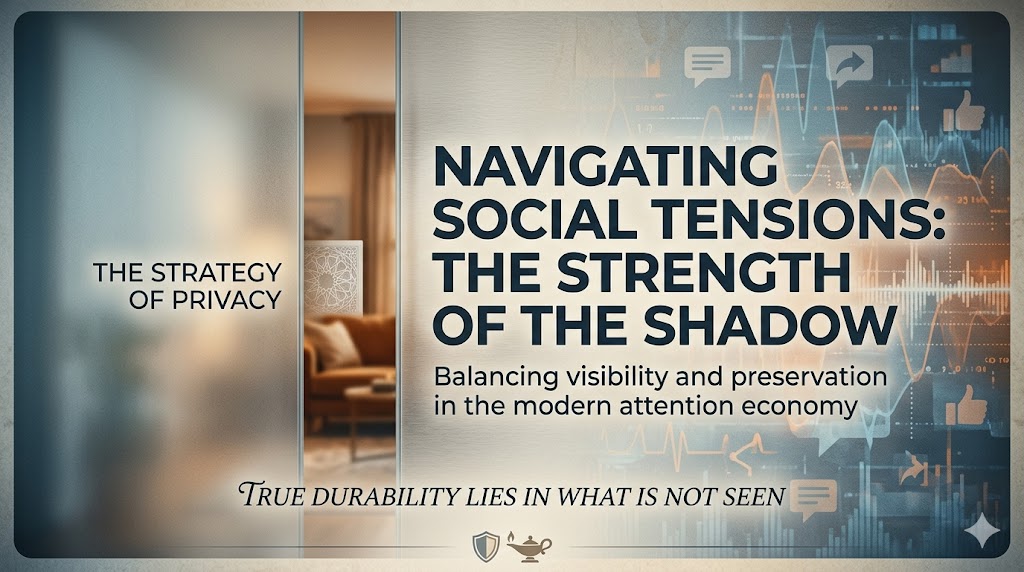
It is a striking observation that people often hinder each other, sometimes so frustrated that they seek happiness in mocking or even damaging what is dear to someone else. Especially in prosperous countries, a sense of togetherness seems to be increasingly scarce.
Yet, you and I can make a difference. First, by not participating in this and by keeping a respectful distance, even when others are seeking attention. Second, by not constantly placing what is dear to you at the center of conversations. If Islam is important to you, live as a Muslim(a), but avoid continuously defending your way of life in public debates. If your beloved is dear to you, cherish your relationship and turn a deaf ear to insults. Do not share your love with the world at every opportunity; the world is rarely truly interested, but it will not hesitate to poke fun if you invite it.

We cannot change society, but we can change how we view ourselves and interact with our environment.
Especially in times of social tension, restricting your environment, minimizing dependencies, and focusing attention on your loved ones is of great significance.
Does your beloved truly become happier by appearing prominently on your social media page? The answer is no…
This observation touches on the core of the ‘attention economy’, in which the public space has become an arena for destructive frustration rather than constructive encounter.
The proposed strategy—a form of voluntary detachment or privacy as a protective barrier—is essentially a psychological emergency plan for social stability. Here are some mechanisms:
The paradox of visibility: In a world where sharing is encouraged, exposure is often confused with validation. Once we make what is sacred to us (faith, partner, conviction) public, we invite others to judge.
The noise of the masses: Few people are interested in the deep value of another’s happiness, but many are eager for the chance to project their own dissatisfaction.
“Keeping it small” as resilience:
By focusing on your immediate environment and limiting dependencies, resilience grows. Emotional sovereignty is achieved by keeping a distance from others’ provocations.
Inner silence: The question of whether social media truly makes your beloved happier is a litmus test. True intimacy and conviction flourish best in the shelter, where they do not always need to be explained or defended. By not making everything public, you create a haven, immune to the whims of public opinion—a valuable piece of advice for anyone seeking inner peace.
Afterword
According to a biblical story, Peter, as a loyal follower of Jesus, denied their relationship, knowing that admitting it would lead to his death. Whether this is betrayal depends on what follows: after the denial, Peter dedicates his life to completing Jesus’s life’s work. This points to a tactical maneuver, not a betrayal.
This reinterpretation highlights the psychological depth of a tactical maneuver over the moral judgment of betrayal. It is recognizable when we think about protecting what is dear by remaining temporarily invisible.
The strategy of shelter: In a hostile environment, confrontation is often counterproductive. Peter’s denial made it possible to later, from the shadows, lay the foundation for what followed. Betrayal is a break with the essence; a tactical denial is a sacrifice of the ego for the greater goal.
Psychological resilience: Sometimes it is necessary not to profess beliefs or loved ones publicly to keep them alive privately. Just as a sailor must sometimes tack against the wind, so Peter’s denial is not a change of course, but a necessary maneuver.
The relevance for today: True loyalty is not always found in public affirmation, but in the actions that follow when the storm has passed. By temporarily hiding his connection, Peter was ultimately able to lay the most lasting foundation. Visibility is often the enemy of durability.
We use cookies to improve your experience on our site. By using our site, you consent to cookies.
Manage your cookie preferences below:
Essential cookies enable basic functions and are necessary for the proper function of the website.
These cookies are needed for adding comments on this website.
These cookies are used for managing login functionality on this website.
You can find more information in our Cookie Policy and Privacy Policy.