https://profpeter.online/the-architecture-of-profpeter-online/Physical Address
Jalan Presint 5, Apartment 5R1 Putrajaya 62200 Malaysia
From Content to Community: Your Safe Space for Intentional Living |
https://profpeter.online/the-architecture-of-profpeter-online/Physical Address
Jalan Presint 5, Apartment 5R1 Putrajaya 62200 Malaysia

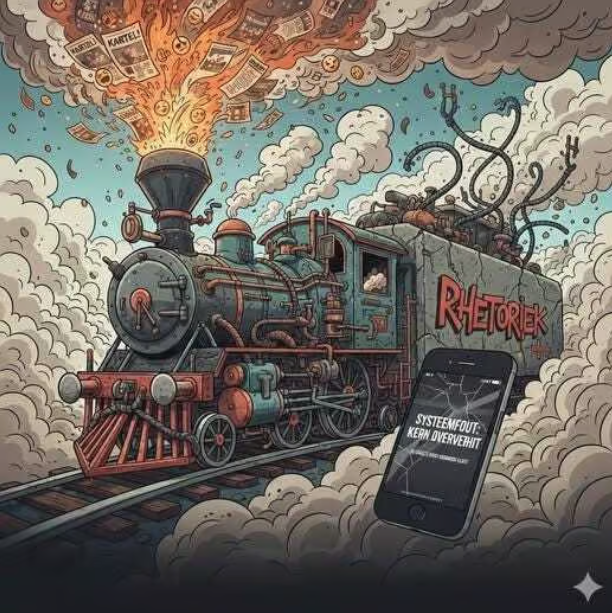
For anyone who regularly visits social media, it comes as no surprise that the “Law of Extremes”—constantly clashing—erodes nuance to the point where an element worthy of connection indeed connects with whatever value remains from the crumbled opposition.
Self-proclaimed intellectuals, in particular, have offered the insight that this is where the strength of democracy lies: that freedom of speech derives its meaning from “connection through destruction.” Not only is there little to no scientific basis for applying this chemical observation to a democracy, but it also creates a combat model, which is exactly what we typically observe on social media timelines.
So, let us park that cliché in a garage labeled “nice idea, but unproven,” and build instead on the foundation of context. Perhaps context offers more room for growth, eventually overgrowing the sentiment that only the fight between extremes determines the quality of shared values.
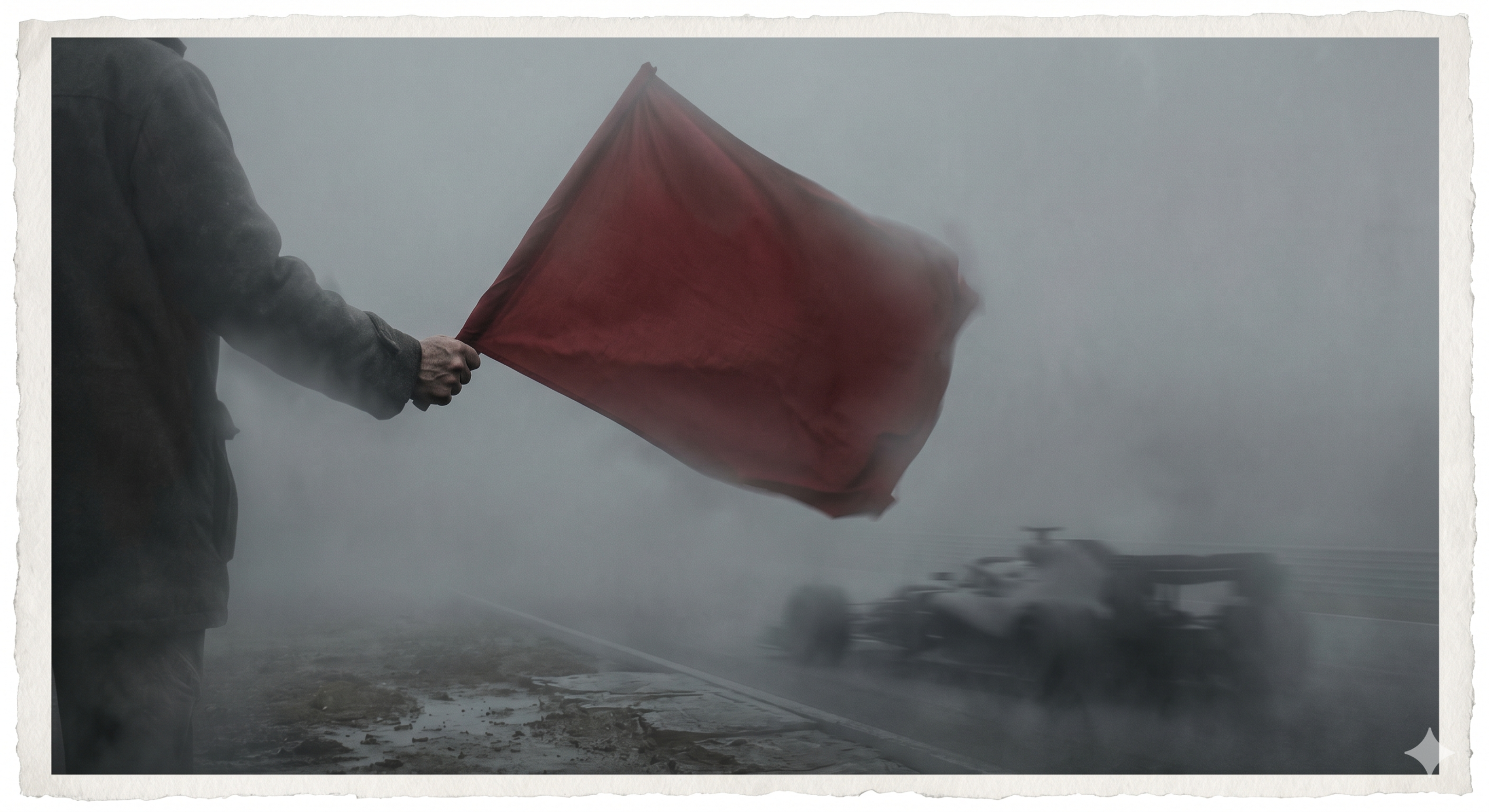
This brings me to “Red Flags.” Applied loosely to motor racing, for instance, a flag waves to tell the drivers they must stop racing for a moment. Take the frequently uttered (and shared) phrase: “Islam is the cancer of every society.” This is often flagged, and the intervention of that flag (rightly) draws a great deal of criticism. Are we simply subject to the Law of Extremes that deems such a flag unnecessary, or has an “indulgence” been added to buy off the personal consequences (the claims against social media owners)?
Whatever the case, the great loser is nuance, context, and with it, the much-needed insight into personal experiences and perspectives. Could it be that a real discussion about the place and meaning of ideologies (religions included) is desperately needed? Namely, the mutual recognition that a religion strives for something (a perfect image of the Creator) that can never be reached, but that the striving itself is what makes it so vital?
Could it be that anyone claiming to represent a “perfect” ideology is merely fumbling with their own “cross”? Could it be that the person writing such a post is deeply distraught after hearing that a car driven by a Muslim crashed into a terrace full of people? Could it be that there is simply a plea for help underneath it all?
The list of questions is long, but the rush to condemnation is unhelpful. Knowledge of the circumstances is precisely that “bitter, hard context” that provides direction. It also prevents us from constantly passing the buck of guilt to the first passerby on the street or the first person in the news.
The only real red flag is the tendency to condemn without knowing; the tendency to flag without any investigative value. For me personally, the Law of Extremes is an abstract approach used to oppress the many for the sake of the “cross” of a few.
Ora et labora.

Forensic psychologist & researcher, author of “Prof. Peter’s Paper Trails”.
Decoding human behavior for SMEs and legal professionals across the EU and ASEAN.
We use cookies to improve your experience on our site. By using our site, you consent to cookies.
Manage your cookie preferences below:
Essential cookies enable basic functions and are necessary for the proper function of the website.
These cookies are needed for adding comments on this website.
These cookies are used for managing login functionality on this website.
You can find more information in our Cookie Policy and Privacy Policy.