Physical Address
Jalan Presint 5, Apartment 5R1 Putrajaya 62200 Malaysia
|
From Content to Community: Your Safe Space for Intentional Living
|

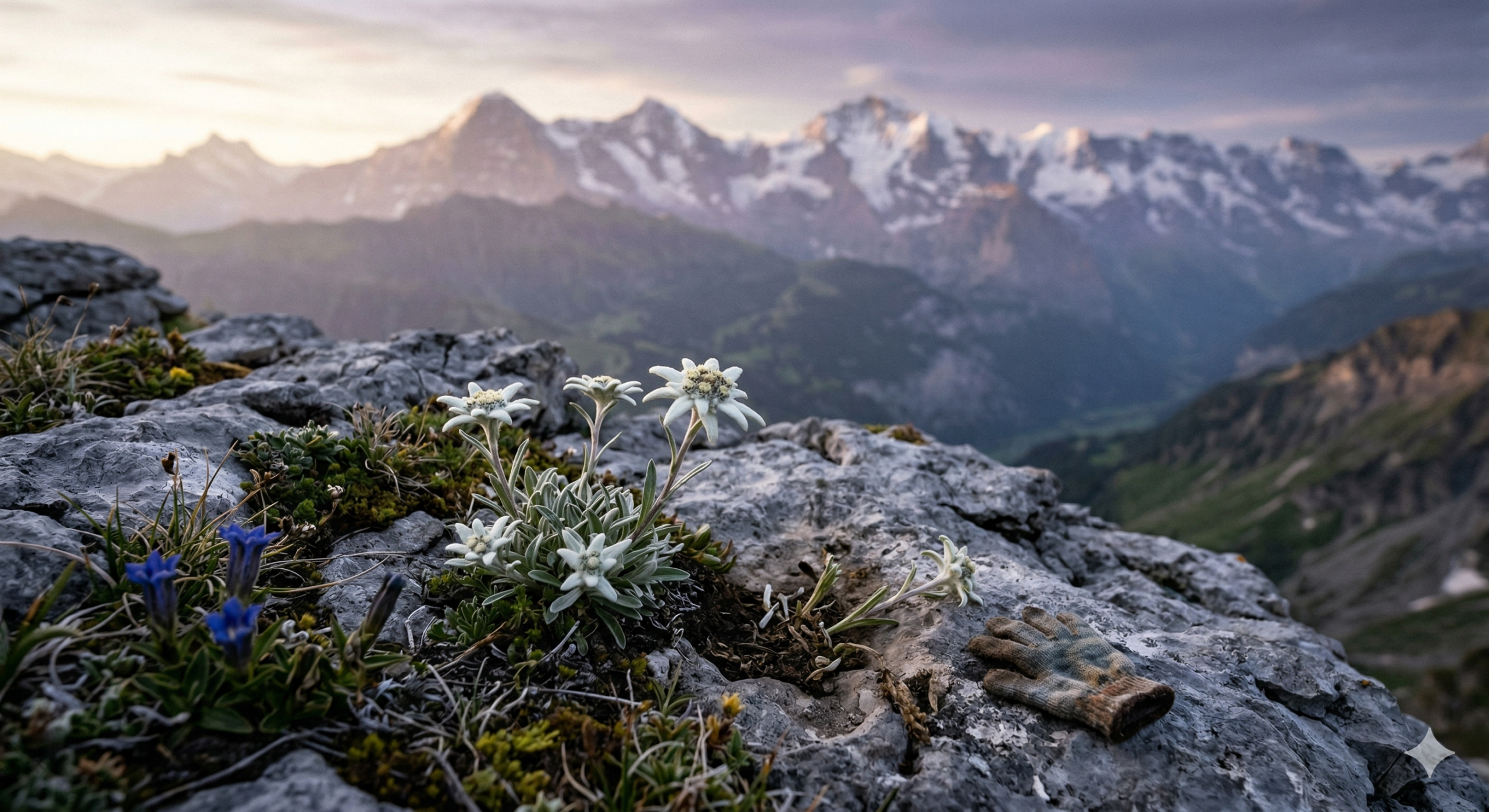
The Edelweiss is a beautiful flower, blooming solitarily at high altitudes in the Alps. Once an immigrant from Asia, it is now a symbol of strength, perseverance, and love. It survives where others have long since perished: in thin air, harsh winds, and on rocky soil. Precisely for this reason, it became desirable. People flocked to the mountains en masse to pick it: as proof of courage, as a souvenir, as a token of love. But the moment you hold it in your hands, it is already dying. The flower withers, its roots are broken, it will bear no fruit. What remains is a withered flower—destined for the trash bin.
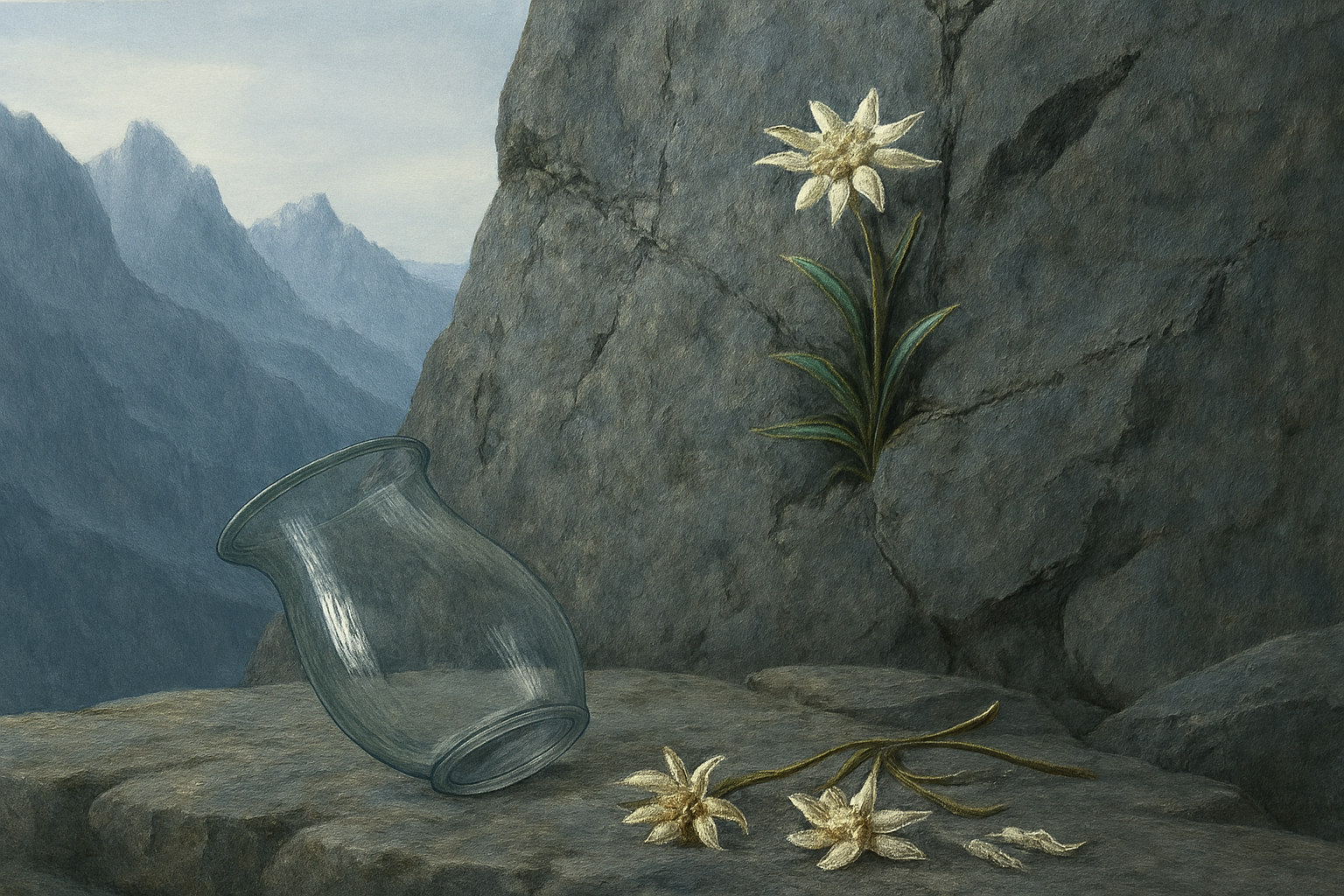
Today, this is called progress: every day a new term, a fresh syndrome, an applicable disorder, a protocol, or a trajectory—neatly packaged as self-care, empowerment, and freedom of choice. We take humans out of their own context, place them in a vase of fears and solutions, and call that care. The Edelweiss within every human being—the capacity to endure, to doubt, to mourn, to hope—is detached from its nourishing soil and transformed into a product, a label, or a campaign.
Where in the past ‘Deo Volente’ and ‘Ora et labora’ still referred to a sense of limitation—an acknowledgment that life is not entirely malleable—they have become empty sounds in many Western societies. Religions were once clumsy but serious attempts to encircle the Edelweiss: the vulnerable core of existence, mortality, love, and fear. We have tucked the roots of that Edelweiss beneath the DNA of every religion, and subsequently sawed off the plant itself. What remains is a Westerner who simultaneously distrusts and misses religion, who no longer possesses a vocabulary for reverence, boundaries, and mystery. The existential questions have remained, but the addresses have changed. Instead of praying, we scroll. Instead of a ritual, a search bar. Instead of a community sitting silently beside us, an algorithm that answers.
In that void, our democracies have found a new trading system: insecurity as a raw material. Freedom of speech and choice are sold as the highest values, while the underlying infrastructure actually runs on the permanent stimulation of fear, outrage, and deficiency. There are hardly any guardrails left—no shared language for boundaries, no common narrative about what a human being needs to simply be allowed to exist. What remains is a space in which every doubt is immediately converted into a product, a trajectory, a label. In this setting, self-care has been retranslated into an individual survival strategy: run to Dr. Google, consult an AI, diagnose yourself, optimize your brain, your body, your soul—not to protect the Edelweiss, but to comply with a system that flourishes on the human being who experiences himself as a permanent problem.
Ten minutes of scrolling on social media is enough to uproot an entire field of Edelweiss. Doomscrolling—endlessly sifting through negative and alarming content—amplifies anxiety, powerlessness, and gloom. At the same time, micro-diagnoses, self-help jargon, and influencer psychology flood the timeline, repackaging normal human suffering as a disorder and turning vulnerability into a brand. The individual is pulled from the mountain wall of their context and placed in a vase of algorithmic attention. We confuse harvesting clicks with providing care.
The absurdity of all this becomes visible on a small scale. In a recent Amsterdam city council meeting regarding the safety around an asylum seeker center, the conversation shifted from sexual violence and protection to a semantic debate over terms like “people with a penis.” The core issue—boundaries, responsibility, protection of the vulnerable—faded into the background. At the same time, word choice took center stage, as if they did not want to see the Edelweiss itself, but only the bouquet of language on the table. Language was arranged, rearranged, and defended, but the reality they were supposed to be discussing lay already half-withered next to the vase. It is indicative of the perversion of modern man: preferring to argue about the arrangement of dead flowers rather than facing the question of why the roots were severed in the first place.
Fortunately, humanity shares one stubborn trait with the Edelweiss: the persistent tendency to grow back above the stone anyway. We bend and conform for the sake of peace, sometimes past the point of self-denial, but there are limits to what a civilization can endure. Ice ages, flat-earth dogmas, the abuse of children in churches—time and again, they mark not only the origins, but especially the decline of civilizations that confuse humanity with their own ideology. Humanity is inherently connective; it is the systems and narratives that steer, splinter, and numb. Perhaps it is time to take a deep breath, look outward a little less, and see nature again without wanting to possess it. He who thinks to enrich himself by stealing a flower does not become a capturer of hearts, but an accomplice to the emptiness that follows.
In that sense, the most radical form of care is perhaps this: not plucking yet another new wisdom to combat ailments, but refusing to participate in the raid. Not turning every ache into a disorder, not turning every human into a case, not turning every risk into a permanent crisis. No extra vase, no new label, no next trajectory—but simply leaving a piece of the mountain undisturbed. The Edelweiss does not need to be saved by being relocated; above all, it does not need to be picked once again.
We use cookies to improve your experience on our site. By using our site, you consent to cookies.
Manage your cookie preferences below:
Essential cookies enable basic functions and are necessary for the proper function of the website.
These cookies are needed for adding comments on this website.
These cookies are used for managing login functionality on this website.
You can find more information in our Cookie Policy and Privacy Policy.


