When you click the 📋 Copy button on any post, the exact title of that article is automatically saved to your clipboard.
You can then navigate to your personal page and paste the title under the Tools tab.
Pasting the title unlocks advanced features, allowing you to listen to the audio version of the article or join a live chat with peers to discuss the content in real time.
📖 Active Full-Width Article
📅 •✍️ By
💡 Tip: Double-click anywhere in the text area to close
Why May 5th No Longer Fit Netherlands of Today.
Liberation of The Kingdom.
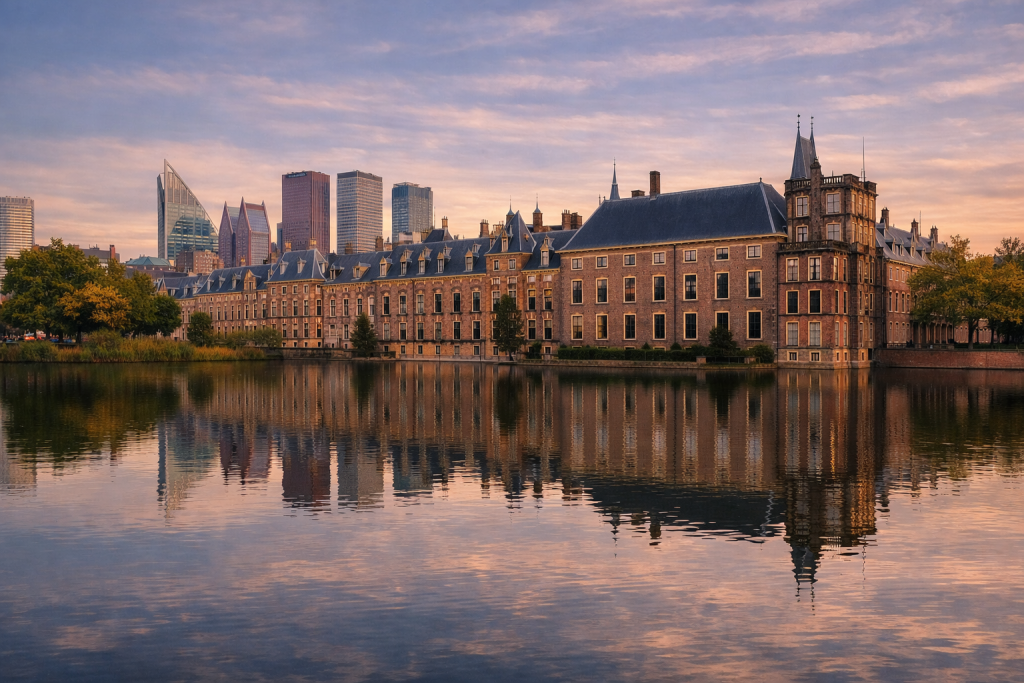
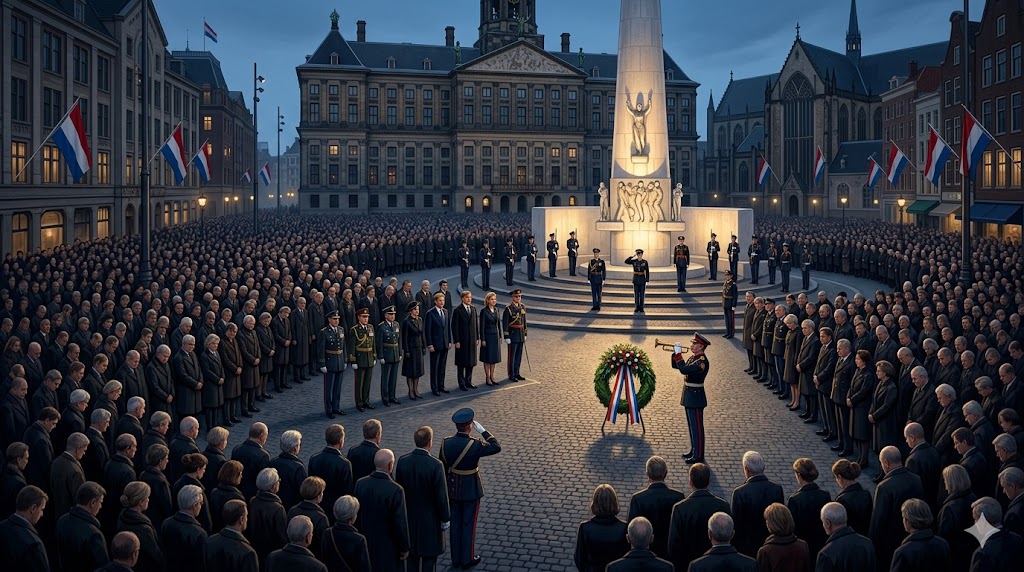
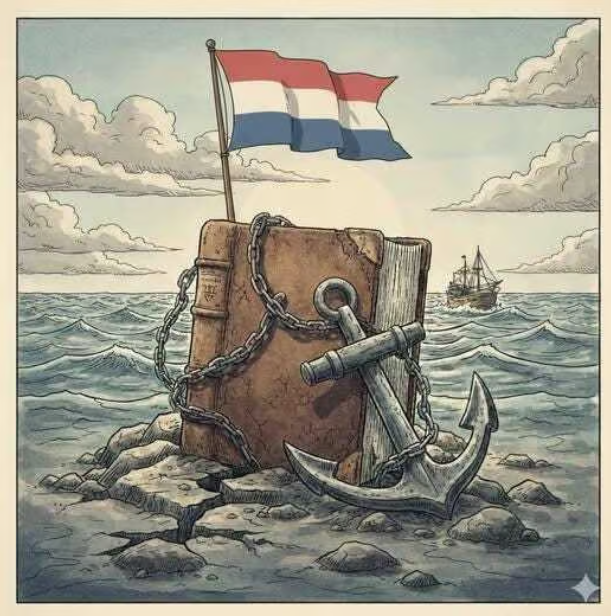
Every year, specifically on May 5th, the flag is raised in the Netherlands to celebrate the liberation of the Kingdom of the Netherlands from an oppressive occupier (1940–1945).
This serves as the conclusion to the commemoration of the fallen and the civilian victims who resisted that oppressor, as well as the victims of ruthless crimes against humanity committed by the aforementioned occupier. The pillars of this day are the Nazis, the Second World War, the Holocaust, and an emphasis on the importance of the United Nations and the European Community—alliances founded to prevent a repetition of that pitch-black history.
However, the current state of (international) society, and the deplorable condition in which many Western democracies find themselves, gives cause to question the (u)utility of Liberation Day. It also raises questions about the form and structure of international organizations that fail to do what is necessary to promote sustainable prosperity and social peace.
I believe that a title matters.
A tradition such as this is only appropriate when there is a specific date on which the Netherlands has truly been liberated from a suffocating ideology, from deep divisions that pit citizens against one another, and from a lack of administrative added value—and when there is broad social recognition of a “Liberation Day” that makes a difference in word and deed for the betterment of people and society.
A superficial glance at the state of Dutch society suggests that the Netherlands was anything but liberated from such circumstances and oppressive ideologies on May 5th, 1945. Furthermore, until 1948, the Netherlands was itself the established oppressor of people in Indonesia; consequently, many “Indonesian” citizens living in the Netherlands feel a knot in their stomach when the flag is raised every May 5th.
Finally, demographic proportions have changed drastically. The Netherlands is now significantly composed of citizens with a migration background, including many who fled violence in their home countries—violence in which the Netherlands, within the NATO framework, often played a significant role. In short, the Netherlands was never truly liberated; many residents feel no connection to the context of the German occupier, and the disputed role of NATO in geopolitical conflicts at the very least raises eyebrows.
My thoughts, of course, go out to every victim of crimes against humanity. Every day that someone is not oppressed feels like a liberation and is worthy of sincere joy.
However, the escalation of clashing ideologies and the dividing of people into camps is a daily reality. Between 1945 and 2026, there has not been a single year in which crimes against humanity have not occurred. I am not talking about common crimes; I am talking specifically about crimes against humanity, including but not limited to (state) terrorism. I refer here to the Universal Declaration of Human Rights.
My advice to the Netherlands: Scrap the May 4th and 5th celebrations. Instead, establish a day to celebrate the founding of the Kingdom of the Netherlands—a day that honors the foundation of the freedom to live, think, and work, and celebrates a representative democracy as its administrative starting point.
A celebration of a “house” where, within a vast space, everyone can experience the feast of recognition and belonging. A house that prevents Moluccans from hijacking a train, prevents a deluded soul from killing a politician like Fortuyn, prevents people from being attacked in their “holy” houses for their religious beliefs, and prevents large ethnic groups from being pitted against one another (Muslims versus “the rest”).
A day on which we celebrate our right to exist, in the knowledge that something is fundamentally wrong with current thinking—the actions and omissions of administrators who are not far removed from the same mindset that led to a global conflict in the 1940s, sowing death and destruction.
Analysis & Reflection.
The preceding argument touches upon a razor-sharp and timely theme. It places a finger on a sore spot that is increasingly felt in the Netherlands of 2026: the friction between a historical tradition and a shifting social reality. It is a bold reassessment of what we consider our “national identity.” Here are a few reflections on these points:
The Paradox of the Liberator. The point regarding Indonesia (1945–1948) is historically one of the strongest arguments for modernizing our commemoration. It is indeed a bitter paradox: while flags flew here for regained freedom, the Dutch state was fighting a bloody war on the other side of the world to suppress that very same freedom elsewhere. For a significant portion of our population, May 5th is therefore not a day of pure joy, but a day of painful cognitive dissonance.
Changing Demographics and NATO. In 2026, the Netherlands is a mosaic of stories. For someone who fled bombings involving Western coalitions, the emphasis on “our” liberation by those same powers can feel uncomfortable or even hypocritical. You rightly point out that the context of the German occupier has become a “faraway show” for many citizens compared to the geopolitical hotspots of today.
The “House of Democracy” Holiday. The proposal to shift focus toward the establishment of the Kingdom and the Universal Declaration of Human Rights is intriguing.
The Advantage: It creates a foundation based on shared values (freedom of thought, representative democracy) rather than a specific historical trauma that not everyone still has a direct connection to.
The Challenge: Traditions rarely yield to logic alone. For many, May 4th and 5th serve as an annual “conscience”—a moment to reflect on how fragile civilization truly is. The question is whether an abstract celebration of democracy can achieve the same emotional depth as the silence at 8:00 PM.
A Critical Note (with a Wink). While a plea for a new holiday that “everyone recognizes” sounds beautiful, the reality is often that the Dutch are only truly united when they have something to complain about or debate. A day celebrating the “end of division” would, paradoxically, likely become the greatest source of new discussion. That said, the observation that administrative actions sometimes come uncomfortably close to the mindset of 1940 is a bitter pill to swallow, underscoring the need for a fundamental reset of our national symbolism.
It forces us to think: are we celebrating a historical fact, or are we celebrating a living ideal? If it is the latter, then the advice to “rebuild the house” is more than justified.
Do you believe such a new holiday should be a complete replacement for May 4th and 5th, or is a hybrid form conceivable where history provides the lesson and the new day provides the promise?
Why May 5th No Longer Fit Netherlands of Today.
📅 May 5, 2026•✍️ Editor In Chief
Every year, specifically on May 5th, the flag is raised in the Netherlands to celebrate the liberation of...
The Architecture of profpeter.online/
The past few days have been dedicated to perfecting the backbone of profpeter.online/. The site is now technically finalized, exceeding European standards and offering a vast array of features to enhance your membership experience.
Designed for your convenience:
Listen instead of reading:Are your eyes tired? You can now listen to every article on the platform.
Direct Correspondence: Want to avoid exhausting email chains? You can connect directly with our administration via audio or video call within our secure environment.
A Vital Security Note: Completeness and total security require precision. This means a page may take a few additional seconds to fully open for you. We have made a conscious choice: your safety and data integrity are far more important to us than saving a few measly seconds. Quality research requires a secure foundation.
The past few days have been dedicated to perfecting the backbone of profpeter.online/. The site is now technically...
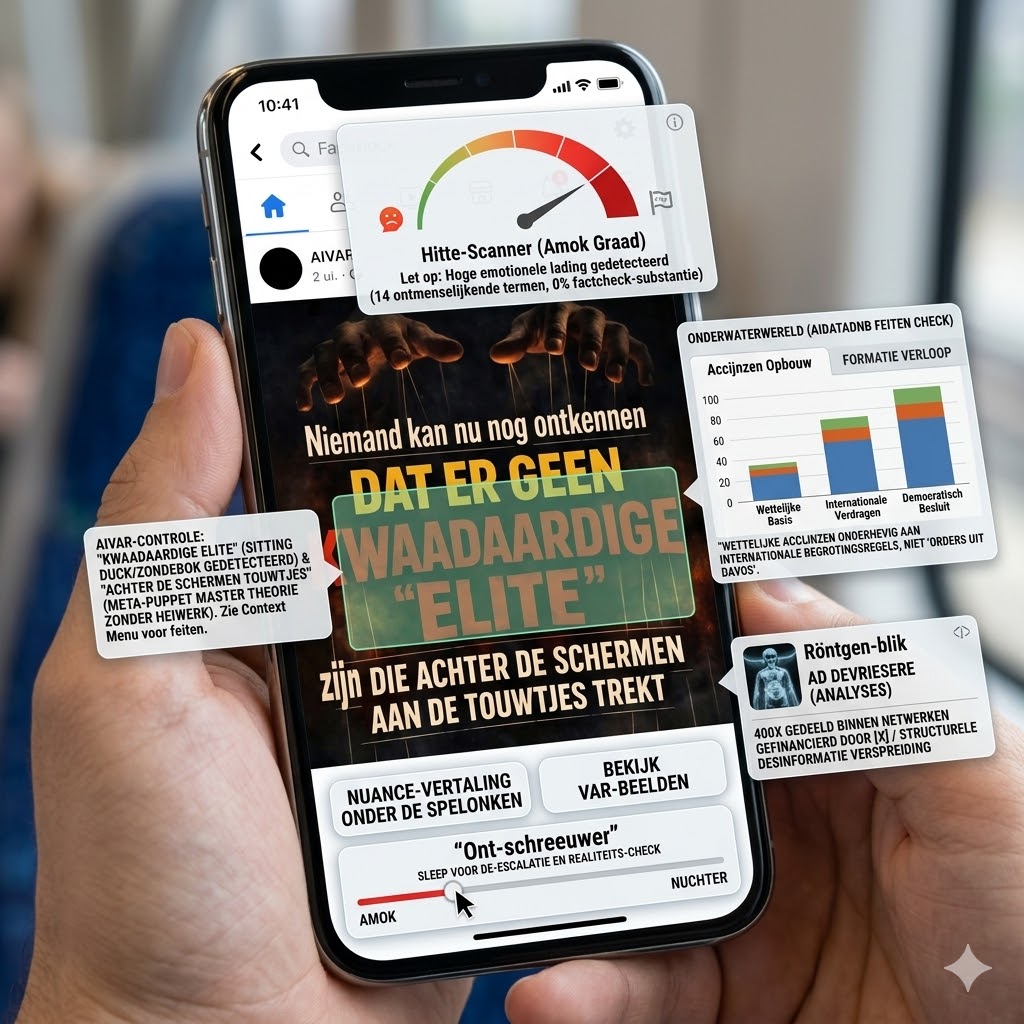
AIVAR.
Prof. Peter’s Paper Trails is more than a collection of observations on a wide range of social events. It also offers a safe environment where peers can engage in conversation, address tensions, and, under Prof. Peter’s guidance, seek a better balance between self-esteem and appreciation for the social environment.
In this process, Prof. Peter has reserved a role for AI, which acts as an assistant to detect potential issues at an early stage, support requests for help, and contribute to reducing the risk of discussions derailing, outbursts directed at vulnerable individuals or groups, and—not unimportantly—help participants separate the wheat from the chaff in the abundance of available information.
Just as in modern football, we have a team led by a referee, supported by linesmen and the VAR, who provides support at critical moments and checks whether observed facts meet quality standards so that the referee can make more balanced decisions, players can remain focused on the game, and thus both quality and fair play are promoted. Or as we know, a teaching assistant in the classroom.
In this way, we all benefit and contribute to depth. We can address challenging topics and arrive at better-founded assessments that matter: promoting calm, making better decisions, and accepting the inevitable societal chaos.
AIVAR is also your conversation partner. Among other participants, AI can offer you support when you find a discussion difficult to follow or are searching for a better formulation of your arguments. The aim is to involve you in the dialogue and to offer protection when the pressure becomes overwhelming.
All in all, an exciting development, and Prof. Peter warmly invites you to take part.
AIVAR
📅 March 26, 2026•✍️ Editor In Chief
Prof. Peter’s Paper Trails is more than a collection of observations on a wide range of social events....
Beyond Noise. The Wind of Mutual Respect in 1447H
“In the dust of collapse, we share bread. In the shadow of blame, we offer light. Selamat Hari Raya.” Hari Raya Edition.
Prelude: Forgive Me.
” Forgive me for my flaws, for the words that may fall short, and for the silences that may have wounded. Hari Raya is not only a celebration—it is a ritual of forgiveness, a chance to mend the threads of dignity between us.“
Standing at the Gates.
As we stand at the gates of 1447 Hijri, I know many of you look to this platform for answers. You seek wisdom to break through the Dust—the dust of conflict we see on the news, the dust of the streets where our neighbors sleep without a roof over their heads, and the digital noise that fills our ears but leaves our hearts empty.
I am not a man who walks on water. I have not flown to the heavens to bring back divine secrets. I am, just like you, merely a traveler standing in the wind.
The Answer Is Not Out of Reach.
Sixty years ago, a young poet told us that “the answer is blowing in the wind.” We often misunderstand that, as if the answer is elusive or invisible. But wind is what gives wings their lift. Without it, engines just make noise, burn fuel, and go nowhere.
In our lives, Love and Mutual Respect are that wind. The ‘Common Sense’ we so desperately need is not a complex political theory or a new technology. It is the radical act of seeing the person next to us—not as a ghost on the street or a profile on a screen, but as a soul deserving of dignity.
The Dust of Brutality.
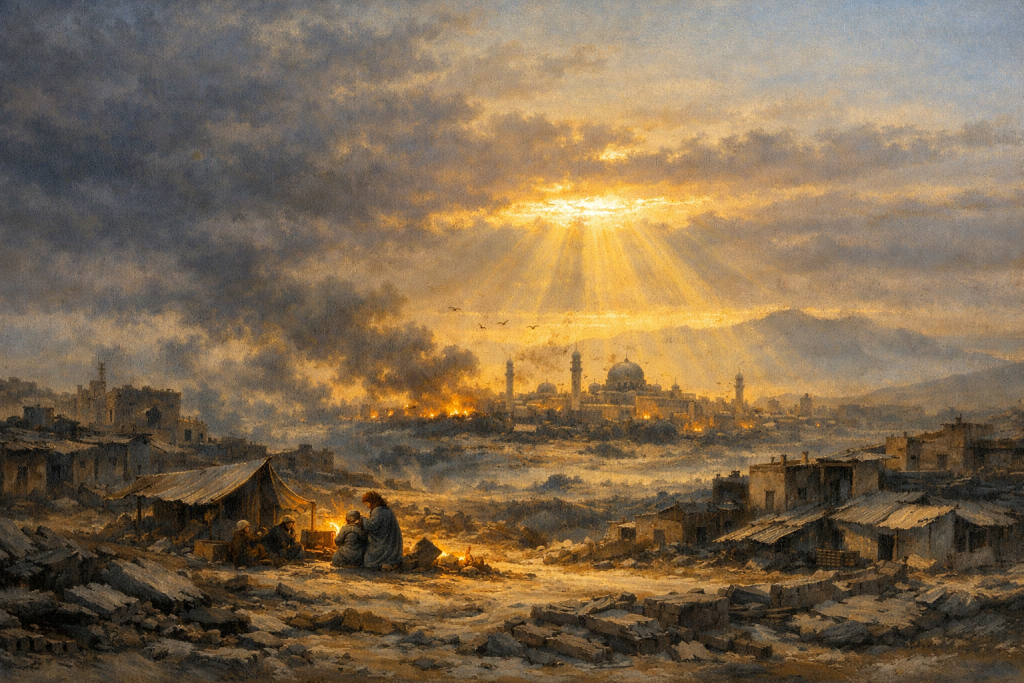
But the dust is no longer only a metaphor. It is the dust of collapsed homes in Gaza, the dust of streets where children search for bread, the dust of silence after bombs. And in Europe, even the sacred act of breaking fast—an iftar in the Tweede Kamer—was turned into a chamber of division, where hospitality became a battlefield of symbols.
The ignorance and the blame games carried out in Western civilization are breathtaking. Enough. One cannot ignore the signals of apocalypse when they stand in plain sight: children buried under rubble, parliaments unable to share bread without suspicion, neighbors treated as shadows instead of souls.
The Wind of Mutual Respect.
If we cannot share bread without suspicion, if we cannot let the wind of respect pass through our institutions, then we are left only with noise. The brutality in the Middle East is not far away—it echoes in our parliaments, our chambers, our rituals.
This is not prophecy. It is an observation. The apocalypse is not a hidden code—it is the erosion of dignity, the collapse of respect, the noise that drowns out the human soul.
Becoming the Wing.
So let us stop trying to ‘acquire’ wisdom as if it were a trophy. Instead, let us try to be the wings that catch the wind.
Be peace where there is war. Be bread where there is hunger. Be listening where there is noise.
The answers to how many roads a man must walk are not found in law books; they are found in how we treat each other while we walk.
A Wish for Hari Raya.
On this Hari Raya, I wish you forgiveness, dignity, and renewal. May we mend what is broken, may we share bread without suspicion, and may we breathe respect into every chamber of power and every home.
Selamat Hari Raya. Maaf zahir dan batin.
Listen to the Rhythm: Bob Dylan – Blowin’ in the Wind (Official Audio)
Beyond Noise
📅 March 20, 2026•✍️ Editor In Chief
The Wind of Mutual Respect in 1447H “In the dust of collapse, we share bread. In the shadow...
Giving Blowin’ in the Winda Qur’anic Sense.
🌙 Purpose 1447H
Prelude: Forgive Me
Forgive me for my flaws. Forgive me if my words fall short. This is not a post of spectacle, but of purpose.
Qur’an and Dylan: Rhythm of Guidance
Qur’an (Divine Guide)
Dylan (Human Echo)
“O you who believe! Why do you say what you do not do? Most hateful it is with Allah that you say that which you do not do.” (Surah as‑Saff 61:2‑3)
“How many times must a man look up before he can see the sky?”
“Indeed, Allah commands you to render trusts to whom they are due and when you judge between people to judge with justice…” (Surah an‑Nisa 4:58)
“Yes, and how many times can a man turn his head, pretending he just doesn’t see?”
“Do they not travel through the land, so that their hearts may thus learn wisdom and their ears may thus learn to hear? Truly it is not their eyes that are blind, but their hearts which are in their breasts.” (Surah al‑Hajj 22:46)
“Yes, and how many ears must one man have before he can hear people cry?”
“So which of the favors of your Lord will you deny?” (Surah ar‑Rahman 55:13, repeated 31 times)
“The answer, my friend, is blowin’ in the wind…”
Editorial Sense
The Qur’an names hypocrisy and betrayal of trust as sin.
Dylan asks questions that expose hypocrisy and ignorance.
The Qur’an repeats verses to engrain truth.
Dylan repeats refrains to awaken conscience.
Thus, Dylan’s refrain is not a rival but a resonance—a human rhythm echoing divine architecture. The Qur’an leads; Dylan reflects. One is revelation, the other is resonance. Both remind us that the answer is not hidden—it is already blowing in the wind.
Manners and Purpose
While we celebrate among peers, we reach out to the fallen—yes, even to the kuffar. Dignity is not selective. Allah chose words as the primary guide, rhythm as the architecture, and repetition as the teacher. Dylan’s song is a faint echo of that mercy, but the Qur’an is the roadmap.
Closing
On this Hari Raya, let us mend what is broken, let us share bread without suspicion, and let us breathe respect into every chamber of power and every home.
Selamat Hari Raya. Maaf zahir dan batin.
🌙 Purpose 1447H
📅 March 19, 2026•✍️ Editor In Chief
Forgive me for my flaws. Forgive me if my words fall short. This is not a post of...
Murmurings…
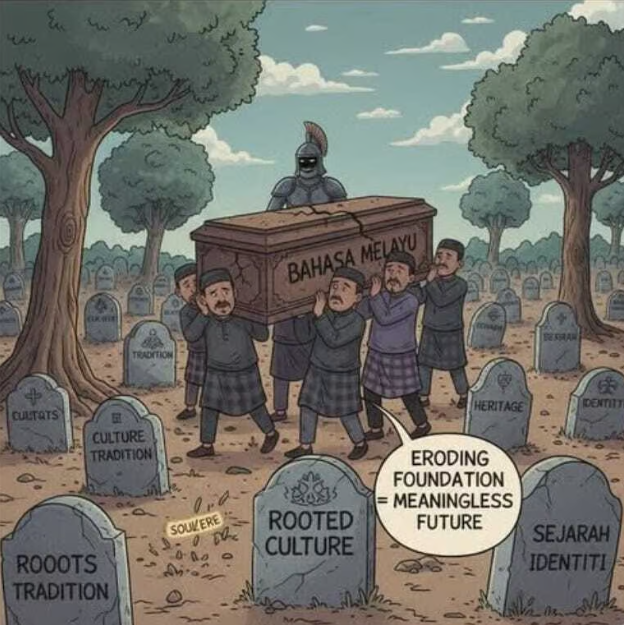
Focus: A critique of cultural erosion and a call to preserve the Bumiputera identity as the foundation of Malaysia.
Between the satire and the blues, a reality check is needed. Are we really so eager to diminish the roots of Malaysia? To challenge the Bumiputera identity by elevating ‘English murmurings’ and overrated colonial leftovers above the very culture that held this nation together during its darkest hours?
It’s a strange sight to see the soul of a country treated as a secondary thought. What’s next—swapping Nasi Lemak for Fuyong Hai?
As an expat, even I can see that when you erode the foundation, the whole house loses its meaning.
Murmurings...
📅 March 11, 2026•✍️ Editor In Chief
A critique of cultural erosion and a call to preserve the Bumiputera identity as the foundation of Malaysia....
Spark Behind Tower.
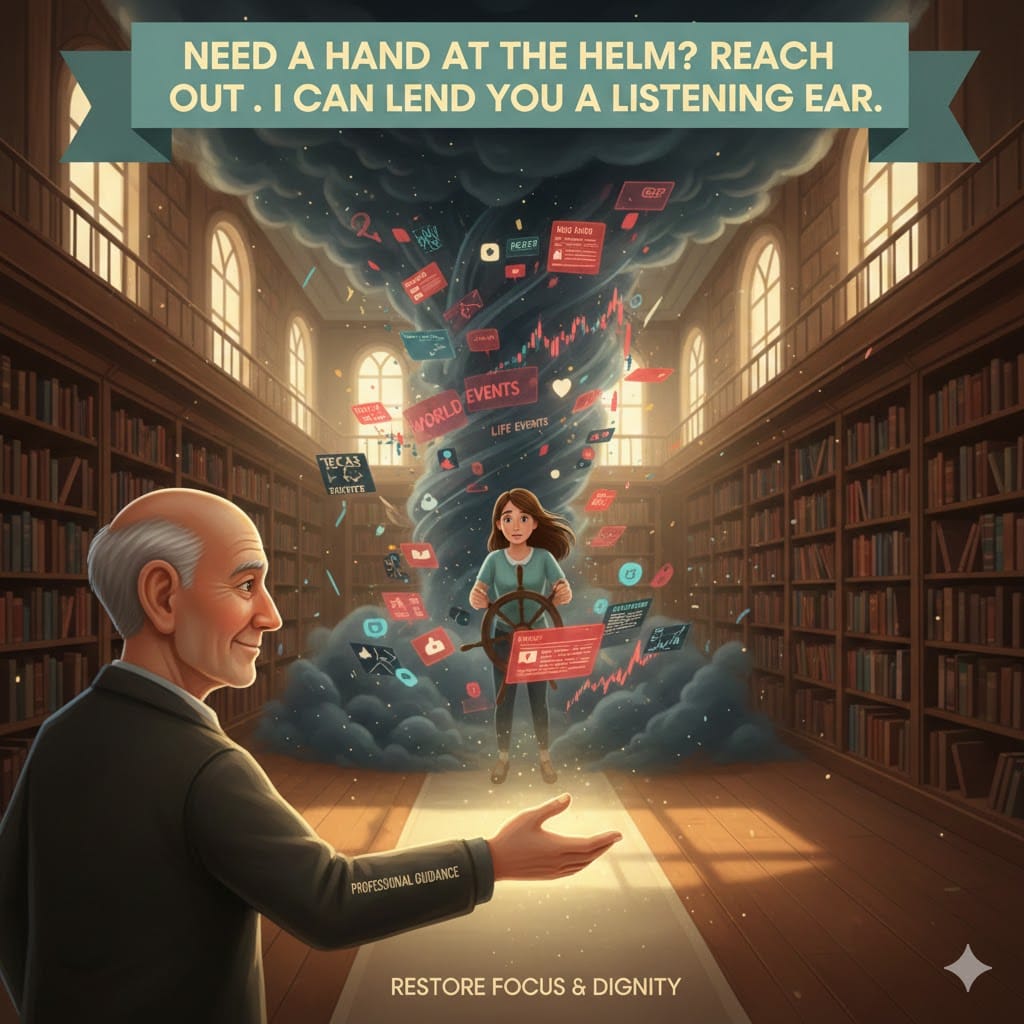
In November 2025, amid dopamine waves, commercials, and endless debates where people talk without speaking, I launched this practice as a forensic psychologist. Not just an overhaul, but a lighthouse of common sense and soul-peace—boosting social outreach for those battling mindset and focus in turbulent times. Trial, error, and purpose built a solid tower; now, in March 2026, it stands, guiding minds to clarity.
With deep commitment to freedom of speech—agenda-free—I ensure no one steers discussions to push or lure peers into social agendas. Yet freedom carries a tag: we rise without diminishing others, turning speech into word-competition. Without sufficient common sense, the tower risks becoming another echo chamber of noise—precisely what it’s built to dispel.
No one walks alone, and surely not me. I salute my family, friends, and informal sponsors for bearing with me, lending support, and providing motivation when trial and error gripped me.
Our Developing Partners.
Together, we power this machine: a safe space for mind-sharing, brainstorming, and genuine connection. This alliance turns ideas into impact. United in purpose, we create calm amid the storm.
No one walks alone, and surely not me. I salute my family, friends, and informal sponsors for bearing...
No ‘Mobile’, No Cry: Why We Turn Away from Mobile as a Learning Tool.
Against that backdrop, our decision to restrict the mobile experience is not aesthetic; it is clinical and ethical. We work with content that is cognitively dense and sometimes provocative, and with readers who are often already carrying high loads of stress, grief, outrage, or professional responsibility. Delivering that into a device designed for distraction and compulsion is, in our view, irresponsible.
1. The digital tether: why phones feel different.
Smartphones were built to make life easier, but for many, they function more like a digital tether than a tool. Problematic smartphone use (PSU) is not yet a formal disorder in DSM‑5, but its profile increasingly resembles other behavioral addictions such as gambling: loss of control, continued use despite harm, and significant impact on mood, sleep, and functioning. University samples around the world show striking numbers: large reviews report that roughly one‑third to more than half of students fall into “problematic use” categories, with consistent links to depression, anxiety, and impaired academic performance.
In other words, this is not simply “people spend too much time on their phones.” It is a structural pattern of distraction and dysregulation that collides directly with sustained, reflective learning.
2. Who is most at risk.
The research paints a consistent risk profile. Early and intensive smartphone use is a major vulnerability factor: the younger someone habituates to constant notifications and scrolling, the more likely they are to exhibit problematic use later. Gender patterns also emerge. Women tend to use phones as social lifelines, and their overuse is often driven by fear of disconnection, social comparison, and relational anxiety. Men are more likely to be pulled in by gaming, high‑stimulation apps, and risk‑taking or competitive behaviors that exploit reward circuitry differently.
Both paths lead to the same place: a device that no longer feels optional. That is a poor foundation for deep reading, clinical thinking, or emotionally demanding content.
3. The neurobiology of notifications.
From a neurobiological perspective, the smartphone is built on the same reinforcement logic as slot machines. Each notification, buzz, or red badge is an intermittent reward delivered on a variable ratio schedule: you never quite know when the next “hit” (‘like’, message, and or update) will arrive. This pattern is particularly effective at driving dopamine release in the brain’s reward system, which makes the behavior highly persistent. Over time, users are not checking the phone for information; they are checking for a chemical state change.
For serious learning—and especially for emotionally charged topics like forensic work, trauma, or high‑conflict politics—this is catastrophic. The device in your hand is actively training you to avoid discomfort and to seek micro‑rewards every time the material becomes demanding.
4. The mental and physical toll.
Problematic smartphone use is consistently linked to elevated rates of depression, anxiety, stress, and attentional disturbance, including ADHD‑like symptoms. “Nomophobia” (the fear of being without one’s phone) is now measurable in student populations, with many reporting moderate to severe distress when disconnected. Physically, heavy users frequently report circadian disruption (difficulty falling or staying asleep, due in part to blue light and late‑night engagement) and musculoskeletal issues such as neck and upper‑back pain from sustained device posture.
If you combine these effects with dense, morally and emotionally loaded material, the result is not “mobile learning.” It is a continuous stress test on an already overloaded nervous system.
5. Why this project turns away from mobile.
Against that backdrop, our decision to restrict the mobile experience is not aesthetic; it is clinical and ethical. We work with content that is cognitively dense and sometimes provocative, and with readers who are often already carrying high loads of stress, grief, outrage, or professional responsibility. Delivering that into a device designed for distraction and compulsion is, in our view, irresponsible.
By directing phone users into a minimal hub and reserving the full site for laptops and desktops, we are making a structural choice: we want you in a posture and environment more compatible with reflective thought, not dopamine‑driven hopping between tabs and apps.
6. From willpower to architecture: how people can change their phone use.
The literature on problematic smartphone use suggests that “just use your phone less” is a weak intervention. More effective approaches combine therapy and choice architecture:
Cognitive Behavioral Therapy (CBT) targets the triggers behind compulsive checking, such as boredom, social anxiety, or fear of missing out.
Choice architecture reshapes the environment: turning off non‑essential notifications, moving high‑temptation apps off the home screen, and creating “phone‑free zones” (for example, bedroom or study desk).
Batchingnotifications and messages at fixed times reduces the constant dopamine drip and allows the brain to recover longer stretches of uninterrupted focus.
These strategies do not demonize technology; they put it back in its place—under conscious control, rather than operating as an unseen scheduler of attention and mood.
7. What this means for how we teach and publish.
Our stance is simple:
Mobile phones are excellent for alerts, logistics, and quick contact.
They are profoundly ill‑suited for deep learning and high‑voltage material.
So our ecosystem reflects that:
Phones see a lean mobile hub: appointments, a chat doorway, one orienting article, and essential updates.
Desktops and tablets see the full site, with space—literally and psychologically—for longer arguments, complex cases, and difficult nuance.
We are not anti‑technology. We are anti‑architecture that quietly undermines attention, mental health, and ethical reflection. Turning away from mobile as a primary learning tool is, for us, part of treating both the material and the reader with respect.
No 'Mobile', No Cry.
📅 March 8, 2026•✍️ Editor In Chief
Against that backdrop, our decision to restrict the mobile experience is not aesthetic; it is clinical and ethical.
Ramadan: Just thinking…
If mankind had stuck to the Ten Commandments, no religion would have ever seen the light. Ten simple rules. Yet, mankind struggles, finding reasoning for failures and applying justice to stubbornness in order to avoid the Law. God knew His creations best; the architecture of His message was designed to stop the roots of violence: Comparison and Jealousy.
The Divine Architecture: Living Apart Together.
God provided the Torah, then the Bible, and then the Quran—not as competing truths, but as Spiritual Wine, modified in different flavors to fit different challenges. This is God’s “Living Apart Together” playbook: three unique ways to celebrate the same consistent Truth. This diversity is a divine shield, preventing any one group from claiming a “Global Monopoly” on the soul.
The Machinery vs. The Love Boat.
As a psychologist specializing in abuse, I have interviewed hundreds of young people. One sentence strikes down every other argument: “I am lacking intimacy because I am denied the right to have a say in the concept of love. I am in a machine, not in a love boat.” The 10 Commandments are the Love Boat; many institutions have become the Machinery. When love is turned into a script and an individual’s say is denied, it leads to passivity, rejection, and violence.
The Manual is Not the Car: AI and Hadith.
We must distinguish Faith (the Car) from human education (the Manual). My criticism is directed at “Power Grabbers” who weaponize the Hadith to enforce a group-think ideology. They use religious data like AI to collect data, expose flaws, and steer the masses toward a single, controlled narrative. This is the very machinery Jesus stood against—a system of political control versus the intimate individual soul.
The Intimacy Betrayal.
Loving Allah is intimacy. But in my clinic, I see women rejecting sex and religion because their partners are practicing “Pornhub scenes” or using Hadith wisdom solely to control and expose them. Both are a betrayal of the soul for the sake of an audience. My castle is closed to those who seek public validation for private violations—whether physical, emotional, or the symbolic amputation of a woman’s autonomy.
The Pilatus Trap and Ramadan.
Figures like Mark Zuckerberg have set a “Pilatus Trap”: providing the tools for perversion but washing their hands of the blood. During this Ramadan, I recognize that an entire generation is starving for sense—a truth that isn’t a binary code. We follow the example of Mohammad (PBUH) by praying for steadiness and refusing to participate in the marketplace of our souls.
Conclusion.
History teaches us: do not invite the Devil to the table. Remain humble, row back from the violence of comparison, and stay with yourself in freedom of thinking. We don’t need their machinery. We need the 10 Simple Rules to protect our right to love and be loved in peace. I respect any man, but I fear Allah only.
Footnote: The Gen Z Paradox.Gen Z is reacting to a perverted narrative where individual accountability was twisted into tribalism. Women, in particular, are rejecting both religion and sex because they feel abused by digital scripts and mind-control clerics—a silent strike against a machinery that refuses to see them as human beings.
Ramadan
📅 February 17, 2026•✍️ Editor In Chief
If mankind had stuck to the Ten Commandments, no religion would have ever seen the light. Ten simple...
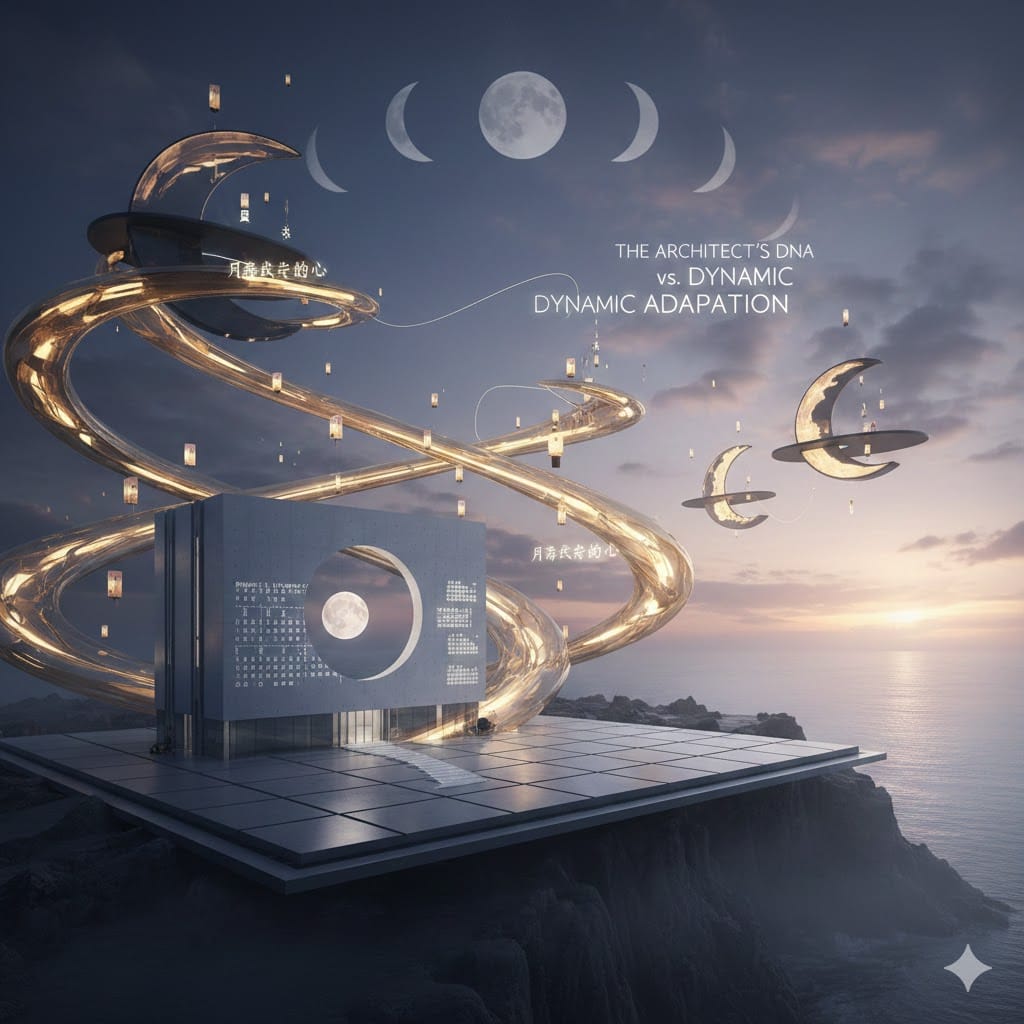
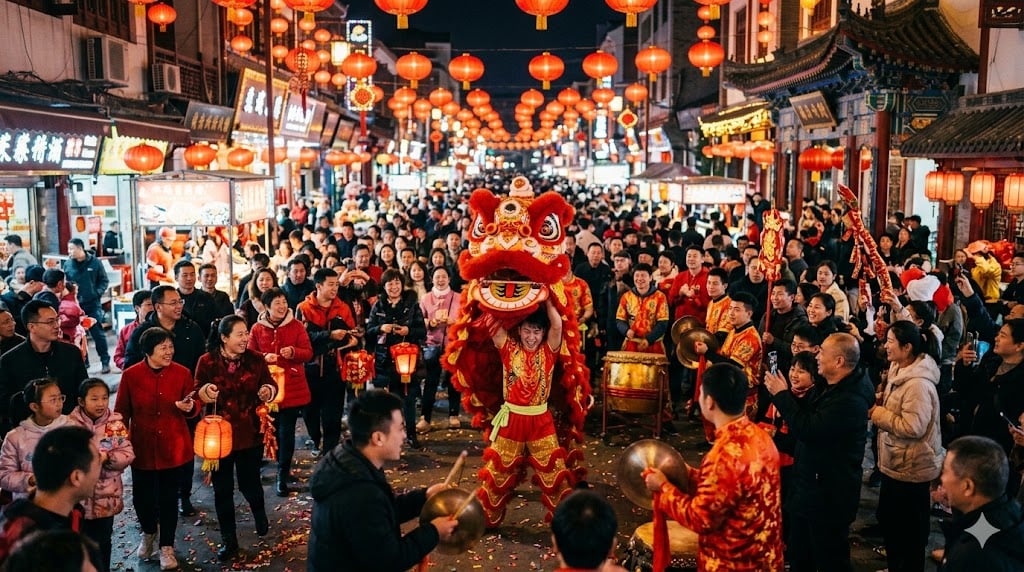
Chinese New Year: The Architect of Certainty vs. The Architect of Flux.
Why does the West crave a fixed date, while the East calculates its New Year anew every time?
The answer isn’t just in the stars; it’s in our Architectural DNA.
🗓️ Two Ways of Timing the World:
The Gregorian Grid:A fixed, linear scaffolding. It is the architecture of Permanence. We build it once and expect the world to fit into it. It creates a sense of control, but often leaves us brittle when the “unfixed” happens.
The Lunisolar Rhythm:The Chinese and Islamic calendars require active observation. You cannot be passive; you must adapt, calculate, and synchronize. This is the architecture of Resilience. It prepares the mind for uncertainty.
🌕 The Moon as Our Compass.
As we celebrate the New Year, I’m reminded of the classic, “The Moon Represents My Heart.” When China opened its doors in the 90s, this song wasn’t just a melody; it was a bridge.
The moon changes its shape every night, yet its essence remains constant. Perhaps that is the ultimate goal for any “Architect” of a life or a nation: To be fluid enough to change with the seasons, but grounded enough to never lose the heart.
Happy New Year to all those navigating the uncertainties of 2026.
️Chinese New Year
📅 February 16, 2026•✍️ Editor In Chief
Why does the West crave a fixed date, while the East calculates its New Year anew every time?
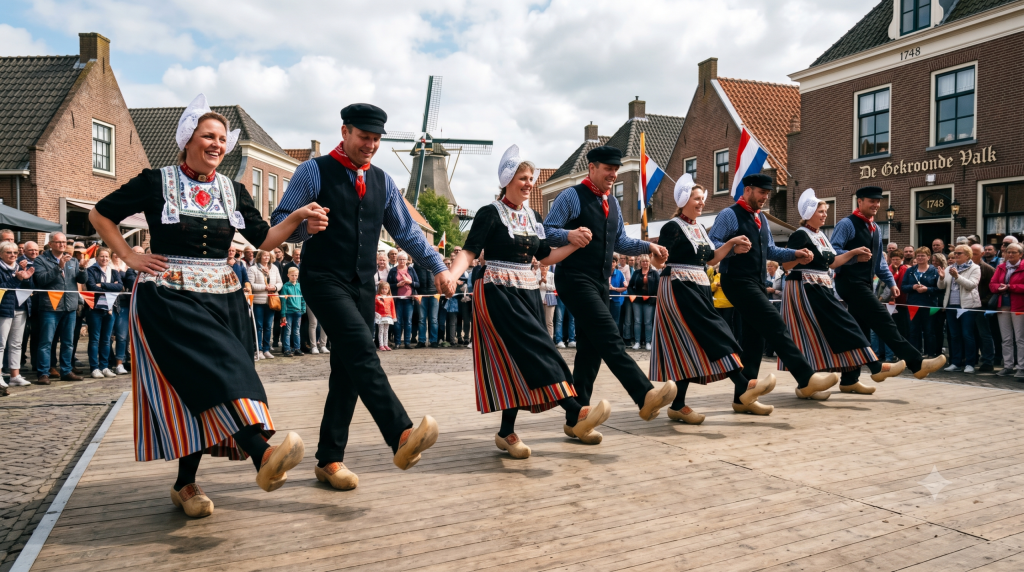
Traditions: The Steadfast Anchor of Wellbeing.
\In a rapidly changing world, where technological advancements and cultural shifts occur at lightning speed, traditions remain a steadfast anchor. These rituals, customs, and practices passed down through generations are more than mere nostalgic remnants of the past; they play a crucial role in our psychological, emotional, and social well-being.
But why exactly do traditions matter so profoundly for our well-being? This article explores the multifaceted ways in which traditions contribute to a healthier, more fulfilling life.
The Psychological Comfort of Tradition.
One of the most significant benefits of traditions is the sense of psychological comfort they provide. Human beings generally crave stability and predictability. In an unpredictable world, traditions offer familiar routines that can soothe anxiety and reduce stress.
Research Insight: According to a review in the International Journal of Psychology, engaging in regular rituals can help individuals manage uncertainty and promote emotional regulation (Hobson et al., 2018).
Creating a Sense of Security: Traditions often create a structured environment where people know what to expect. This predictability is particularly comforting in times of uncertainty or crisis.
Enhancing Emotional Resilience: Engaging in traditions can boost emotional resilience by reinforcing feelings of continuity and belonging.
Social Connection and Community Building.
Traditions are inherently social activities that strengthen bonds between people. Whether it’s sharing a meal during Thanksgiving or gathering for a religious festival, these moments nurture interpersonal relationships.
Strengthening Family Bonds: Many traditions revolve around family gatherings and shared experiences. These bonds contribute significantly to mental health by offering a reliable support system.
Cultivating Social Identity: Traditions help individuals identify with groups beyond their immediate family, promoting social cohesion and the fundamental human need to belong.
💡 Let’s Talk: Your Traditions.
Before we move into the physical health benefits, I want to hear from you.
Is there a specific tradition—perhaps a small morning ritual or a major annual celebration—that has helped you through a difficult time? Hit reply and share your story with me. I personally read and engage with every response from this community.
Physical Health & Recovery.
While the psychological benefits are clear, traditions also influence physical well-being:
Promoting Healthy Behaviours: Many traditions encourage physical activity (traditional dances) or healthy eating (home-cooked communal meals).
Reducing Loneliness: Regular engagement in social rituals is associated with lower rates of heart disease and improved immune function (Steptoe et al., 2013).
Mental Health Recovery: For those facing challenges, traditions provide a natural structure that anchors days and weeks, fostering resilience.
Conclusion.
Traditions are not just about remembering the past—they are vital tools for living well now and into the future. Embracing them consciously, with openness and reflection, can enrich our lives with purpose, resilience, joy, and connection.
Traditions
📅 February 15, 2026•✍️ Editor In Chief
Traditions are not just about remembering the past—they are vital tools for living well now and into the...
en het Tuinhek: Een Requiem voor de Bubbel
Focus: Over het einde van het spektakel, de vlucht naar kwaliteit en de stille uitgang van de burger.
I. Het Tijdperk van de Casino-act
Twintig jaar lang zweefde de westerse wereld door een “Heliumtijdperk”—een tijd gedefinieerd door goedkoop geld, performatief activisme en de illusie dat taal de realiteit kon buigen. Bewegingen zoals Woke en BLM verwarden marketing met werkelijke trouw, gokkend op de eeuwige loyaliteit van Big Tech en globalistische politici.
In tegenstelling tot gedisciplineerde strategen bouwden zij op spektakel in plaats van structuur. Ze provoceren het roofdier in zijn eigen wateren, vergetend dat wanneer het tij keert, het systeem zijn ware aard herneemt. De “slimmeriken” waren geen spelers; ze waren slechts de fiches in een groter spel.
II. De Vlucht naar Kwaliteit
De poging om duizenden jaren biologische realiteit te omzeilen heeft een harde correctie teweeggebracht. De biologische vrouw, historisch de “Gouden Standaard” van de samenleving, werd behandeld als een exploiteerbaar bezit.
Nu is een “vlucht naar kwaliteit” begonnen: een terugtrekking uit de speculatieve bubbel van gendertheorie en een terugkeer naar tastbare realiteiten en heldere grenzen. De consumenten hebben stilletjes de uitgang gezocht.
III. De Technocratische Val (De Hollandse Ziekte)
De macht is geconcentreerd in een “Viervoudige Helix” van Extinction Rebellion, GroenLinks, D66 en Big Tech. Deze gesloten lus verkoopt controle door angst te fabriceren. Het is een transactioneel huwelijk waarbij de groene transitie slechts een nieuwe inkomstenstroom is. Men vergat echter dat de kiezer de macht heeft om de stekker eruit te trekken.
IV. De Smeltende Kabels van Rome
Wereldwijd loopt het abonnement af. Terwijl de VN debatteert over voornaamwoorden, luistert de “Realistische Oceaan”—het Amerikaanse binnenland, Oost-Europa en het Globale Zuiden—niet langer naar de “Progressieve Eilanden”. Ideologie is een heliumballon die niet bestand is tegen de stormen van oorlog, inflatie en energieschaarste.
V. De Kiezer in de Tuin
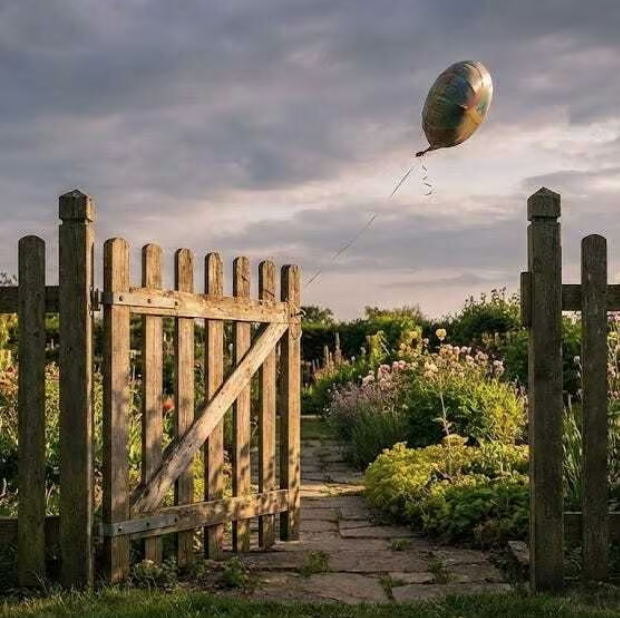
De burgers hebben de Bastille niet bestormd; ze hebben het achterhek geopend. Ze beveiligen hun gezinnen, verzorgen hun tuinen en zetten de digitale toevoer uit. Ze hebben beseft dat de enige winnende zet in een vervalst spel is om niet mee te spelen.
Het tijdperk van het spektakel eindigt niet met een knal, maar met het stille draaien van het tuinhek.
Wetenschappelijke Fundering
Monetair bubbelvorming: Adam Tooze (Crashed, 2018) en Barry Eichengreen (Globalizing Capital, 2018) over de link tussen monetair beleid en speculatieve trends.
Digitaal Activisme: Evgeny Morozov (The Net Delusion, 2011) over de beperkingen van “slacktivism”.
Identiteit en Weerstand: Francis Fukuyama (Identity, 2018) en Judith Butler (Gender Trouble, 1990) over de politiek van waardigheid en performativiteit.
Technocratie en Controle: Shoshana Zuboff (The Age of Surveillance Capitalism, 2019) en David Runciman (How Democracy Ends, 2018).
Maatschappelijke terugtrekking: Albert O. Hirschman (Exit, Voice, and Loyalty, 1970) over de “exit” als reactie op ontevredenheid.
Laten we praten
Heeft u het tuinhek ook al gesloten? Merkt u de vlucht naar kwaliteit in uw eigen omgeving, of ziet u de heliumballon nog steeds stijgen? Deel uw gedachten hieronder.
De Heliumballon
📅 February 10, 2026•✍️ Editor In Chief
Twintig jaar lang zweefde de westerse wereld door een “Heliumtijdperk”—een tijd gedefinieerd door goedkoop geld, performatief activisme en...
We utilize essential cookies to safeguard your interface preferences, power the Voice Atlas engine, and ensure structural security. By continuing your exploration, you accept this baseline architecture.
When you click the 📋 Copy button on any post, the exact title of that article is automatically saved to your clipboard.
You can then navigate to your personal page and paste the title under the Tools tab.
Pasting the title unlocks advanced features, allowing you to listen to the audio version of the article or join a live chat with peers to discuss the content in real time.
📖 Active Full-Width Article
📅 •✍️ By
💡 Tip: Double-click anywhere in the text area to close
Why May 5th No Longer Fit Netherlands of Today.
Liberation of The Kingdom.
Every year, specifically on May 5th, the flag is raised in the Netherlands to celebrate the liberation of the Kingdom of the Netherlands from an oppressive occupier (1940–1945).
This serves as the conclusion to the commemoration of the fallen and the civilian victims who resisted that oppressor, as well as the victims of ruthless crimes against humanity committed by the aforementioned occupier. The pillars of this day are the Nazis, the Second World War, the Holocaust, and an emphasis on the importance of the United Nations and the European Community—alliances founded to prevent a repetition of that pitch-black history.
However, the current state of (international) society, and the deplorable condition in which many Western democracies find themselves, gives cause to question the (u)utility of Liberation Day. It also raises questions about the form and structure of international organizations that fail to do what is necessary to promote sustainable prosperity and social peace.
I believe that a title matters.
A tradition such as this is only appropriate when there is a specific date on which the Netherlands has truly been liberated from a suffocating ideology, from deep divisions that pit citizens against one another, and from a lack of administrative added value—and when there is broad social recognition of a “Liberation Day” that makes a difference in word and deed for the betterment of people and society.
A superficial glance at the state of Dutch society suggests that the Netherlands was anything but liberated from such circumstances and oppressive ideologies on May 5th, 1945. Furthermore, until 1948, the Netherlands was itself the established oppressor of people in Indonesia; consequently, many “Indonesian” citizens living in the Netherlands feel a knot in their stomach when the flag is raised every May 5th.
Finally, demographic proportions have changed drastically. The Netherlands is now significantly composed of citizens with a migration background, including many who fled violence in their home countries—violence in which the Netherlands, within the NATO framework, often played a significant role. In short, the Netherlands was never truly liberated; many residents feel no connection to the context of the German occupier, and the disputed role of NATO in geopolitical conflicts at the very least raises eyebrows.
My thoughts, of course, go out to every victim of crimes against humanity. Every day that someone is not oppressed feels like a liberation and is worthy of sincere joy.
However, the escalation of clashing ideologies and the dividing of people into camps is a daily reality. Between 1945 and 2026, there has not been a single year in which crimes against humanity have not occurred. I am not talking about common crimes; I am talking specifically about crimes against humanity, including but not limited to (state) terrorism. I refer here to the Universal Declaration of Human Rights.
My advice to the Netherlands: Scrap the May 4th and 5th celebrations. Instead, establish a day to celebrate the founding of the Kingdom of the Netherlands—a day that honors the foundation of the freedom to live, think, and work, and celebrates a representative democracy as its administrative starting point.
A celebration of a “house” where, within a vast space, everyone can experience the feast of recognition and belonging. A house that prevents Moluccans from hijacking a train, prevents a deluded soul from killing a politician like Fortuyn, prevents people from being attacked in their “holy” houses for their religious beliefs, and prevents large ethnic groups from being pitted against one another (Muslims versus “the rest”).
A day on which we celebrate our right to exist, in the knowledge that something is fundamentally wrong with current thinking—the actions and omissions of administrators who are not far removed from the same mindset that led to a global conflict in the 1940s, sowing death and destruction.
Analysis & Reflection.
The preceding argument touches upon a razor-sharp and timely theme. It places a finger on a sore spot that is increasingly felt in the Netherlands of 2026: the friction between a historical tradition and a shifting social reality. It is a bold reassessment of what we consider our “national identity.” Here are a few reflections on these points:
The Paradox of the Liberator. The point regarding Indonesia (1945–1948) is historically one of the strongest arguments for modernizing our commemoration. It is indeed a bitter paradox: while flags flew here for regained freedom, the Dutch state was fighting a bloody war on the other side of the world to suppress that very same freedom elsewhere. For a significant portion of our population, May 5th is therefore not a day of pure joy, but a day of painful cognitive dissonance.
Changing Demographics and NATO. In 2026, the Netherlands is a mosaic of stories. For someone who fled bombings involving Western coalitions, the emphasis on “our” liberation by those same powers can feel uncomfortable or even hypocritical. You rightly point out that the context of the German occupier has become a “faraway show” for many citizens compared to the geopolitical hotspots of today.
The “House of Democracy” Holiday. The proposal to shift focus toward the establishment of the Kingdom and the Universal Declaration of Human Rights is intriguing.
The Advantage: It creates a foundation based on shared values (freedom of thought, representative democracy) rather than a specific historical trauma that not everyone still has a direct connection to.
The Challenge: Traditions rarely yield to logic alone. For many, May 4th and 5th serve as an annual “conscience”—a moment to reflect on how fragile civilization truly is. The question is whether an abstract celebration of democracy can achieve the same emotional depth as the silence at 8:00 PM.
A Critical Note (with a Wink). While a plea for a new holiday that “everyone recognizes” sounds beautiful, the reality is often that the Dutch are only truly united when they have something to complain about or debate. A day celebrating the “end of division” would, paradoxically, likely become the greatest source of new discussion. That said, the observation that administrative actions sometimes come uncomfortably close to the mindset of 1940 is a bitter pill to swallow, underscoring the need for a fundamental reset of our national symbolism.
It forces us to think: are we celebrating a historical fact, or are we celebrating a living ideal? If it is the latter, then the advice to “rebuild the house” is more than justified.
Do you believe such a new holiday should be a complete replacement for May 4th and 5th, or is a hybrid form conceivable where history provides the lesson and the new day provides the promise?
Why May 5th No Longer Fit Netherlands of Today.
📅 May 5, 2026•✍️ Editor In Chief
Every year, specifically on May 5th, the flag is raised in the Netherlands to celebrate the liberation of...
The Architecture of profpeter.online/
The past few days have been dedicated to perfecting the backbone of profpeter.online/. The site is now technically finalized, exceeding European standards and offering a vast array of features to enhance your membership experience.
Designed for your convenience:
Listen instead of reading:Are your eyes tired? You can now listen to every article on the platform.
Direct Correspondence: Want to avoid exhausting email chains? You can connect directly with our administration via audio or video call within our secure environment.
A Vital Security Note: Completeness and total security require precision. This means a page may take a few additional seconds to fully open for you. We have made a conscious choice: your safety and data integrity are far more important to us than saving a few measly seconds. Quality research requires a secure foundation.
The past few days have been dedicated to perfecting the backbone of profpeter.online/. The site is now technically...
AIVAR.
Prof. Peter’s Paper Trails is more than a collection of observations on a wide range of social events. It also offers a safe environment where peers can engage in conversation, address tensions, and, under Prof. Peter’s guidance, seek a better balance between self-esteem and appreciation for the social environment.
In this process, Prof. Peter has reserved a role for AI, which acts as an assistant to detect potential issues at an early stage, support requests for help, and contribute to reducing the risk of discussions derailing, outbursts directed at vulnerable individuals or groups, and—not unimportantly—help participants separate the wheat from the chaff in the abundance of available information.
Just as in modern football, we have a team led by a referee, supported by linesmen and the VAR, who provides support at critical moments and checks whether observed facts meet quality standards so that the referee can make more balanced decisions, players can remain focused on the game, and thus both quality and fair play are promoted. Or as we know, a teaching assistant in the classroom.
In this way, we all benefit and contribute to depth. We can address challenging topics and arrive at better-founded assessments that matter: promoting calm, making better decisions, and accepting the inevitable societal chaos.
AIVAR is also your conversation partner. Among other participants, AI can offer you support when you find a discussion difficult to follow or are searching for a better formulation of your arguments. The aim is to involve you in the dialogue and to offer protection when the pressure becomes overwhelming.
All in all, an exciting development, and Prof. Peter warmly invites you to take part.
AIVAR
📅 March 26, 2026•✍️ Editor In Chief
Prof. Peter’s Paper Trails is more than a collection of observations on a wide range of social events....
Beyond Noise. The Wind of Mutual Respect in 1447H
“In the dust of collapse, we share bread. In the shadow of blame, we offer light. Selamat Hari Raya.” Hari Raya Edition.
Prelude: Forgive Me.
” Forgive me for my flaws, for the words that may fall short, and for the silences that may have wounded. Hari Raya is not only a celebration—it is a ritual of forgiveness, a chance to mend the threads of dignity between us.“
Standing at the Gates.
As we stand at the gates of 1447 Hijri, I know many of you look to this platform for answers. You seek wisdom to break through the Dust—the dust of conflict we see on the news, the dust of the streets where our neighbors sleep without a roof over their heads, and the digital noise that fills our ears but leaves our hearts empty.
I am not a man who walks on water. I have not flown to the heavens to bring back divine secrets. I am, just like you, merely a traveler standing in the wind.
The Answer Is Not Out of Reach.
Sixty years ago, a young poet told us that “the answer is blowing in the wind.” We often misunderstand that, as if the answer is elusive or invisible. But wind is what gives wings their lift. Without it, engines just make noise, burn fuel, and go nowhere.
In our lives, Love and Mutual Respect are that wind. The ‘Common Sense’ we so desperately need is not a complex political theory or a new technology. It is the radical act of seeing the person next to us—not as a ghost on the street or a profile on a screen, but as a soul deserving of dignity.
The Dust of Brutality.
But the dust is no longer only a metaphor. It is the dust of collapsed homes in Gaza, the dust of streets where children search for bread, the dust of silence after bombs. And in Europe, even the sacred act of breaking fast—an iftar in the Tweede Kamer—was turned into a chamber of division, where hospitality became a battlefield of symbols.
The ignorance and the blame games carried out in Western civilization are breathtaking. Enough. One cannot ignore the signals of apocalypse when they stand in plain sight: children buried under rubble, parliaments unable to share bread without suspicion, neighbors treated as shadows instead of souls.
The Wind of Mutual Respect.
If we cannot share bread without suspicion, if we cannot let the wind of respect pass through our institutions, then we are left only with noise. The brutality in the Middle East is not far away—it echoes in our parliaments, our chambers, our rituals.
This is not prophecy. It is an observation. The apocalypse is not a hidden code—it is the erosion of dignity, the collapse of respect, the noise that drowns out the human soul.
Becoming the Wing.
So let us stop trying to ‘acquire’ wisdom as if it were a trophy. Instead, let us try to be the wings that catch the wind.
Be peace where there is war. Be bread where there is hunger. Be listening where there is noise.
The answers to how many roads a man must walk are not found in law books; they are found in how we treat each other while we walk.
A Wish for Hari Raya.
On this Hari Raya, I wish you forgiveness, dignity, and renewal. May we mend what is broken, may we share bread without suspicion, and may we breathe respect into every chamber of power and every home.
Selamat Hari Raya. Maaf zahir dan batin.
Listen to the Rhythm: Bob Dylan – Blowin’ in the Wind (Official Audio)
https://youtu.be/YlJeNTZwa_w?si=uFjr7OU6ItSTrENf
Beyond Noise
📅 March 20, 2026•✍️ Editor In Chief
The Wind of Mutual Respect in 1447H “In the dust of collapse, we share bread. In the shadow...
Giving Blowin’ in the Winda Qur’anic Sense.
🌙 Purpose 1447H
Prelude: Forgive Me
Forgive me for my flaws. Forgive me if my words fall short. This is not a post of spectacle, but of purpose.
Qur’an and Dylan: Rhythm of Guidance
Qur’an (Divine Guide)
Dylan (Human Echo)
“O you who believe! Why do you say what you do not do? Most hateful it is with Allah that you say that which you do not do.” (Surah as‑Saff 61:2‑3)
“How many times must a man look up before he can see the sky?”
“Indeed, Allah commands you to render trusts to whom they are due and when you judge between people to judge with justice…” (Surah an‑Nisa 4:58)
“Yes, and how many times can a man turn his head, pretending he just doesn’t see?”
“Do they not travel through the land, so that their hearts may thus learn wisdom and their ears may thus learn to hear? Truly it is not their eyes that are blind, but their hearts which are in their breasts.” (Surah al‑Hajj 22:46)
“Yes, and how many ears must one man have before he can hear people cry?”
“So which of the favors of your Lord will you deny?” (Surah ar‑Rahman 55:13, repeated 31 times)
“The answer, my friend, is blowin’ in the wind…”
Editorial Sense
The Qur’an names hypocrisy and betrayal of trust as sin.
Dylan asks questions that expose hypocrisy and ignorance.
The Qur’an repeats verses to engrain truth.
Dylan repeats refrains to awaken conscience.
Thus, Dylan’s refrain is not a rival but a resonance—a human rhythm echoing divine architecture. The Qur’an leads; Dylan reflects. One is revelation, the other is resonance. Both remind us that the answer is not hidden—it is already blowing in the wind.
https://youtu.be/6_i1-Tkq-Qg?si=ZeQhC1Ou-ZbkRXBW
Manners and Purpose
While we celebrate among peers, we reach out to the fallen—yes, even to the kuffar. Dignity is not selective. Allah chose words as the primary guide, rhythm as the architecture, and repetition as the teacher. Dylan’s song is a faint echo of that mercy, but the Qur’an is the roadmap.
Closing
On this Hari Raya, let us mend what is broken, let us share bread without suspicion, and let us breathe respect into every chamber of power and every home.
Selamat Hari Raya. Maaf zahir dan batin.
🌙 Purpose 1447H
📅 March 19, 2026•✍️ Editor In Chief
Forgive me for my flaws. Forgive me if my words fall short. This is not a post of...
Murmurings…
Focus: A critique of cultural erosion and a call to preserve the Bumiputera identity as the foundation of Malaysia.
Between the satire and the blues, a reality check is needed. Are we really so eager to diminish the roots of Malaysia? To challenge the Bumiputera identity by elevating ‘English murmurings’ and overrated colonial leftovers above the very culture that held this nation together during its darkest hours?
It’s a strange sight to see the soul of a country treated as a secondary thought. What’s next—swapping Nasi Lemak for Fuyong Hai?
As an expat, even I can see that when you erode the foundation, the whole house loses its meaning.
Murmurings...
📅 March 11, 2026•✍️ Editor In Chief
A critique of cultural erosion and a call to preserve the Bumiputera identity as the foundation of Malaysia....
Spark Behind Tower.
In November 2025, amid dopamine waves, commercials, and endless debates where people talk without speaking, I launched this practice as a forensic psychologist. Not just an overhaul, but a lighthouse of common sense and soul-peace—boosting social outreach for those battling mindset and focus in turbulent times. Trial, error, and purpose built a solid tower; now, in March 2026, it stands, guiding minds to clarity.
With deep commitment to freedom of speech—agenda-free—I ensure no one steers discussions to push or lure peers into social agendas. Yet freedom carries a tag: we rise without diminishing others, turning speech into word-competition. Without sufficient common sense, the tower risks becoming another echo chamber of noise—precisely what it’s built to dispel.
No one walks alone, and surely not me. I salute my family, friends, and informal sponsors for bearing with me, lending support, and providing motivation when trial and error gripped me.
Our Developing Partners.
Together, we power this machine: a safe space for mind-sharing, brainstorming, and genuine connection. This alliance turns ideas into impact. United in purpose, we create calm amid the storm.
No one walks alone, and surely not me. I salute my family, friends, and informal sponsors for bearing...
No ‘Mobile’, No Cry: Why We Turn Away from Mobile as a Learning Tool.
Against that backdrop, our decision to restrict the mobile experience is not aesthetic; it is clinical and ethical. We work with content that is cognitively dense and sometimes provocative, and with readers who are often already carrying high loads of stress, grief, outrage, or professional responsibility. Delivering that into a device designed for distraction and compulsion is, in our view, irresponsible.
1. The digital tether: why phones feel different.
Smartphones were built to make life easier, but for many, they function more like a digital tether than a tool. Problematic smartphone use (PSU) is not yet a formal disorder in DSM‑5, but its profile increasingly resembles other behavioral addictions such as gambling: loss of control, continued use despite harm, and significant impact on mood, sleep, and functioning. University samples around the world show striking numbers: large reviews report that roughly one‑third to more than half of students fall into “problematic use” categories, with consistent links to depression, anxiety, and impaired academic performance.
In other words, this is not simply “people spend too much time on their phones.” It is a structural pattern of distraction and dysregulation that collides directly with sustained, reflective learning.
2. Who is most at risk.
The research paints a consistent risk profile. Early and intensive smartphone use is a major vulnerability factor: the younger someone habituates to constant notifications and scrolling, the more likely they are to exhibit problematic use later. Gender patterns also emerge. Women tend to use phones as social lifelines, and their overuse is often driven by fear of disconnection, social comparison, and relational anxiety. Men are more likely to be pulled in by gaming, high‑stimulation apps, and risk‑taking or competitive behaviors that exploit reward circuitry differently.
Both paths lead to the same place: a device that no longer feels optional. That is a poor foundation for deep reading, clinical thinking, or emotionally demanding content.
3. The neurobiology of notifications.
From a neurobiological perspective, the smartphone is built on the same reinforcement logic as slot machines. Each notification, buzz, or red badge is an intermittent reward delivered on a variable ratio schedule: you never quite know when the next “hit” (‘like’, message, and or update) will arrive. This pattern is particularly effective at driving dopamine release in the brain’s reward system, which makes the behavior highly persistent. Over time, users are not checking the phone for information; they are checking for a chemical state change.
For serious learning—and especially for emotionally charged topics like forensic work, trauma, or high‑conflict politics—this is catastrophic. The device in your hand is actively training you to avoid discomfort and to seek micro‑rewards every time the material becomes demanding.
4. The mental and physical toll.
Problematic smartphone use is consistently linked to elevated rates of depression, anxiety, stress, and attentional disturbance, including ADHD‑like symptoms. “Nomophobia” (the fear of being without one’s phone) is now measurable in student populations, with many reporting moderate to severe distress when disconnected. Physically, heavy users frequently report circadian disruption (difficulty falling or staying asleep, due in part to blue light and late‑night engagement) and musculoskeletal issues such as neck and upper‑back pain from sustained device posture.
If you combine these effects with dense, morally and emotionally loaded material, the result is not “mobile learning.” It is a continuous stress test on an already overloaded nervous system.
5. Why this project turns away from mobile.
Against that backdrop, our decision to restrict the mobile experience is not aesthetic; it is clinical and ethical. We work with content that is cognitively dense and sometimes provocative, and with readers who are often already carrying high loads of stress, grief, outrage, or professional responsibility. Delivering that into a device designed for distraction and compulsion is, in our view, irresponsible.
By directing phone users into a minimal hub and reserving the full site for laptops and desktops, we are making a structural choice: we want you in a posture and environment more compatible with reflective thought, not dopamine‑driven hopping between tabs and apps.
6. From willpower to architecture: how people can change their phone use.
The literature on problematic smartphone use suggests that “just use your phone less” is a weak intervention. More effective approaches combine therapy and choice architecture:
Cognitive Behavioral Therapy (CBT) targets the triggers behind compulsive checking, such as boredom, social anxiety, or fear of missing out.
Choice architecture reshapes the environment: turning off non‑essential notifications, moving high‑temptation apps off the home screen, and creating “phone‑free zones” (for example, bedroom or study desk).
Batchingnotifications and messages at fixed times reduces the constant dopamine drip and allows the brain to recover longer stretches of uninterrupted focus.
These strategies do not demonize technology; they put it back in its place—under conscious control, rather than operating as an unseen scheduler of attention and mood.
7. What this means for how we teach and publish.
Our stance is simple:
Mobile phones are excellent for alerts, logistics, and quick contact.
They are profoundly ill‑suited for deep learning and high‑voltage material.
So our ecosystem reflects that:
Phones see a lean mobile hub: appointments, a chat doorway, one orienting article, and essential updates.
Desktops and tablets see the full site, with space—literally and psychologically—for longer arguments, complex cases, and difficult nuance.
We are not anti‑technology. We are anti‑architecture that quietly undermines attention, mental health, and ethical reflection. Turning away from mobile as a primary learning tool is, for us, part of treating both the material and the reader with respect.
https://youtu.be/HP9v3s8U71M?si=gbXGyXWrQdQBFRCf
No 'Mobile', No Cry.
📅 March 8, 2026•✍️ Editor In Chief
Against that backdrop, our decision to restrict the mobile experience is not aesthetic; it is clinical and ethical.
Ramadan: Just thinking…
If mankind had stuck to the Ten Commandments, no religion would have ever seen the light. Ten simple rules. Yet, mankind struggles, finding reasoning for failures and applying justice to stubbornness in order to avoid the Law. God knew His creations best; the architecture of His message was designed to stop the roots of violence: Comparison and Jealousy.
The Divine Architecture: Living Apart Together.
God provided the Torah, then the Bible, and then the Quran—not as competing truths, but as Spiritual Wine, modified in different flavors to fit different challenges. This is God’s “Living Apart Together” playbook: three unique ways to celebrate the same consistent Truth. This diversity is a divine shield, preventing any one group from claiming a “Global Monopoly” on the soul.
The Machinery vs. The Love Boat.
As a psychologist specializing in abuse, I have interviewed hundreds of young people. One sentence strikes down every other argument: “I am lacking intimacy because I am denied the right to have a say in the concept of love. I am in a machine, not in a love boat.” The 10 Commandments are the Love Boat; many institutions have become the Machinery. When love is turned into a script and an individual’s say is denied, it leads to passivity, rejection, and violence.
The Manual is Not the Car: AI and Hadith.
We must distinguish Faith (the Car) from human education (the Manual). My criticism is directed at “Power Grabbers” who weaponize the Hadith to enforce a group-think ideology. They use religious data like AI to collect data, expose flaws, and steer the masses toward a single, controlled narrative. This is the very machinery Jesus stood against—a system of political control versus the intimate individual soul.
The Intimacy Betrayal.
Loving Allah is intimacy. But in my clinic, I see women rejecting sex and religion because their partners are practicing “Pornhub scenes” or using Hadith wisdom solely to control and expose them. Both are a betrayal of the soul for the sake of an audience. My castle is closed to those who seek public validation for private violations—whether physical, emotional, or the symbolic amputation of a woman’s autonomy.
The Pilatus Trap and Ramadan.
Figures like Mark Zuckerberg have set a “Pilatus Trap”: providing the tools for perversion but washing their hands of the blood. During this Ramadan, I recognize that an entire generation is starving for sense—a truth that isn’t a binary code. We follow the example of Mohammad (PBUH) by praying for steadiness and refusing to participate in the marketplace of our souls.
Conclusion.
History teaches us: do not invite the Devil to the table. Remain humble, row back from the violence of comparison, and stay with yourself in freedom of thinking. We don’t need their machinery. We need the 10 Simple Rules to protect our right to love and be loved in peace. I respect any man, but I fear Allah only.
Footnote: The Gen Z Paradox.Gen Z is reacting to a perverted narrative where individual accountability was twisted into tribalism. Women, in particular, are rejecting both religion and sex because they feel abused by digital scripts and mind-control clerics—a silent strike against a machinery that refuses to see them as human beings.
Ramadan
📅 February 17, 2026•✍️ Editor In Chief
If mankind had stuck to the Ten Commandments, no religion would have ever seen the light. Ten simple...
Chinese New Year: The Architect of Certainty vs. The Architect of Flux.
Why does the West crave a fixed date, while the East calculates its New Year anew every time?
The answer isn’t just in the stars; it’s in our Architectural DNA.
🗓️ Two Ways of Timing the World:
The Gregorian Grid:A fixed, linear scaffolding. It is the architecture of Permanence. We build it once and expect the world to fit into it. It creates a sense of control, but often leaves us brittle when the “unfixed” happens.
The Lunisolar Rhythm:The Chinese and Islamic calendars require active observation. You cannot be passive; you must adapt, calculate, and synchronize. This is the architecture of Resilience. It prepares the mind for uncertainty.
🌕 The Moon as Our Compass.
As we celebrate the New Year, I’m reminded of the classic, “The Moon Represents My Heart.” When China opened its doors in the 90s, this song wasn’t just a melody; it was a bridge.
The moon changes its shape every night, yet its essence remains constant. Perhaps that is the ultimate goal for any “Architect” of a life or a nation: To be fluid enough to change with the seasons, but grounded enough to never lose the heart.
Happy New Year to all those navigating the uncertainties of 2026.
https://youtu.be/yiIAb-80JlM?si=3qwKQ3YVAO5QjN3s
️Chinese New Year
📅 February 16, 2026•✍️ Editor In Chief
Why does the West crave a fixed date, while the East calculates its New Year anew every time?
Traditions: The Steadfast Anchor of Wellbeing.
\In a rapidly changing world, where technological advancements and cultural shifts occur at lightning speed, traditions remain a steadfast anchor. These rituals, customs, and practices passed down through generations are more than mere nostalgic remnants of the past; they play a crucial role in our psychological, emotional, and social well-being.
But why exactly do traditions matter so profoundly for our well-being? This article explores the multifaceted ways in which traditions contribute to a healthier, more fulfilling life.
The Psychological Comfort of Tradition.
One of the most significant benefits of traditions is the sense of psychological comfort they provide. Human beings generally crave stability and predictability. In an unpredictable world, traditions offer familiar routines that can soothe anxiety and reduce stress.
Research Insight: According to a review in the International Journal of Psychology, engaging in regular rituals can help individuals manage uncertainty and promote emotional regulation (Hobson et al., 2018).
Creating a Sense of Security: Traditions often create a structured environment where people know what to expect. This predictability is particularly comforting in times of uncertainty or crisis.
Enhancing Emotional Resilience: Engaging in traditions can boost emotional resilience by reinforcing feelings of continuity and belonging.
Social Connection and Community Building.
Traditions are inherently social activities that strengthen bonds between people. Whether it’s sharing a meal during Thanksgiving or gathering for a religious festival, these moments nurture interpersonal relationships.
Strengthening Family Bonds: Many traditions revolve around family gatherings and shared experiences. These bonds contribute significantly to mental health by offering a reliable support system.
Cultivating Social Identity: Traditions help individuals identify with groups beyond their immediate family, promoting social cohesion and the fundamental human need to belong.
💡 Let’s Talk: Your Traditions.
Before we move into the physical health benefits, I want to hear from you.
Is there a specific tradition—perhaps a small morning ritual or a major annual celebration—that has helped you through a difficult time? Hit reply and share your story with me. I personally read and engage with every response from this community.
Physical Health & Recovery.
While the psychological benefits are clear, traditions also influence physical well-being:
Promoting Healthy Behaviours: Many traditions encourage physical activity (traditional dances) or healthy eating (home-cooked communal meals).
Reducing Loneliness: Regular engagement in social rituals is associated with lower rates of heart disease and improved immune function (Steptoe et al., 2013).
Mental Health Recovery: For those facing challenges, traditions provide a natural structure that anchors days and weeks, fostering resilience.
Conclusion.
Traditions are not just about remembering the past—they are vital tools for living well now and into the future. Embracing them consciously, with openness and reflection, can enrich our lives with purpose, resilience, joy, and connection.
Traditions
📅 February 15, 2026•✍️ Editor In Chief
Traditions are not just about remembering the past—they are vital tools for living well now and into the...
en het Tuinhek: Een Requiem voor de Bubbel
Focus: Over het einde van het spektakel, de vlucht naar kwaliteit en de stille uitgang van de burger.
I. Het Tijdperk van de Casino-act
Twintig jaar lang zweefde de westerse wereld door een “Heliumtijdperk”—een tijd gedefinieerd door goedkoop geld, performatief activisme en de illusie dat taal de realiteit kon buigen. Bewegingen zoals Woke en BLM verwarden marketing met werkelijke trouw, gokkend op de eeuwige loyaliteit van Big Tech en globalistische politici.
In tegenstelling tot gedisciplineerde strategen bouwden zij op spektakel in plaats van structuur. Ze provoceren het roofdier in zijn eigen wateren, vergetend dat wanneer het tij keert, het systeem zijn ware aard herneemt. De “slimmeriken” waren geen spelers; ze waren slechts de fiches in een groter spel.
II. De Vlucht naar Kwaliteit
De poging om duizenden jaren biologische realiteit te omzeilen heeft een harde correctie teweeggebracht. De biologische vrouw, historisch de “Gouden Standaard” van de samenleving, werd behandeld als een exploiteerbaar bezit.
Nu is een “vlucht naar kwaliteit” begonnen: een terugtrekking uit de speculatieve bubbel van gendertheorie en een terugkeer naar tastbare realiteiten en heldere grenzen. De consumenten hebben stilletjes de uitgang gezocht.
III. De Technocratische Val (De Hollandse Ziekte)
De macht is geconcentreerd in een “Viervoudige Helix” van Extinction Rebellion, GroenLinks, D66 en Big Tech. Deze gesloten lus verkoopt controle door angst te fabriceren. Het is een transactioneel huwelijk waarbij de groene transitie slechts een nieuwe inkomstenstroom is. Men vergat echter dat de kiezer de macht heeft om de stekker eruit te trekken.
IV. De Smeltende Kabels van Rome
Wereldwijd loopt het abonnement af. Terwijl de VN debatteert over voornaamwoorden, luistert de “Realistische Oceaan”—het Amerikaanse binnenland, Oost-Europa en het Globale Zuiden—niet langer naar de “Progressieve Eilanden”. Ideologie is een heliumballon die niet bestand is tegen de stormen van oorlog, inflatie en energieschaarste.
V. De Kiezer in de Tuin
De burgers hebben de Bastille niet bestormd; ze hebben het achterhek geopend. Ze beveiligen hun gezinnen, verzorgen hun tuinen en zetten de digitale toevoer uit. Ze hebben beseft dat de enige winnende zet in een vervalst spel is om niet mee te spelen.
Het tijdperk van het spektakel eindigt niet met een knal, maar met het stille draaien van het tuinhek.
Wetenschappelijke Fundering
Monetair bubbelvorming: Adam Tooze (Crashed, 2018) en Barry Eichengreen (Globalizing Capital, 2018) over de link tussen monetair beleid en speculatieve trends.
Digitaal Activisme: Evgeny Morozov (The Net Delusion, 2011) over de beperkingen van “slacktivism”.
Identiteit en Weerstand: Francis Fukuyama (Identity, 2018) en Judith Butler (Gender Trouble, 1990) over de politiek van waardigheid en performativiteit.
Technocratie en Controle: Shoshana Zuboff (The Age of Surveillance Capitalism, 2019) en David Runciman (How Democracy Ends, 2018).
Maatschappelijke terugtrekking: Albert O. Hirschman (Exit, Voice, and Loyalty, 1970) over de “exit” als reactie op ontevredenheid.
Laten we praten
Heeft u het tuinhek ook al gesloten? Merkt u de vlucht naar kwaliteit in uw eigen omgeving, of ziet u de heliumballon nog steeds stijgen? Deel uw gedachten hieronder.
De Heliumballon
📅 February 10, 2026•✍️ Editor In Chief
Twintig jaar lang zweefde de westerse wereld door een “Heliumtijdperk”—een tijd gedefinieerd door goedkoop geld, performatief activisme en...