When you click the 📋 Copy button on any post, the exact title of that article is automatically saved to your clipboard.
You can then navigate to your personal page and paste the title under the Tools tab.
Pasting the title unlocks advanced features, allowing you to listen to the audio version of the article or join a live chat with peers to discuss the content in real time.
📖 Active Full-Width Article
📅 •✍️ By
💡 Tip: Double-click anywhere in the text area to close
This article examines a global decline into mediocre political representation, using the Netherlands’ representative democracy as its central case study through pointed examples. From Muay Thai’s lost philosophy of respect to dopamine-driven governance, it reveals how core values erode under spectacle and ego.
The Martial Art of Democracy: From Muay Thai Philosophers to Dopamine Politicians
With an Unblinking Stare on Organizational Psychology and Geopolitics.
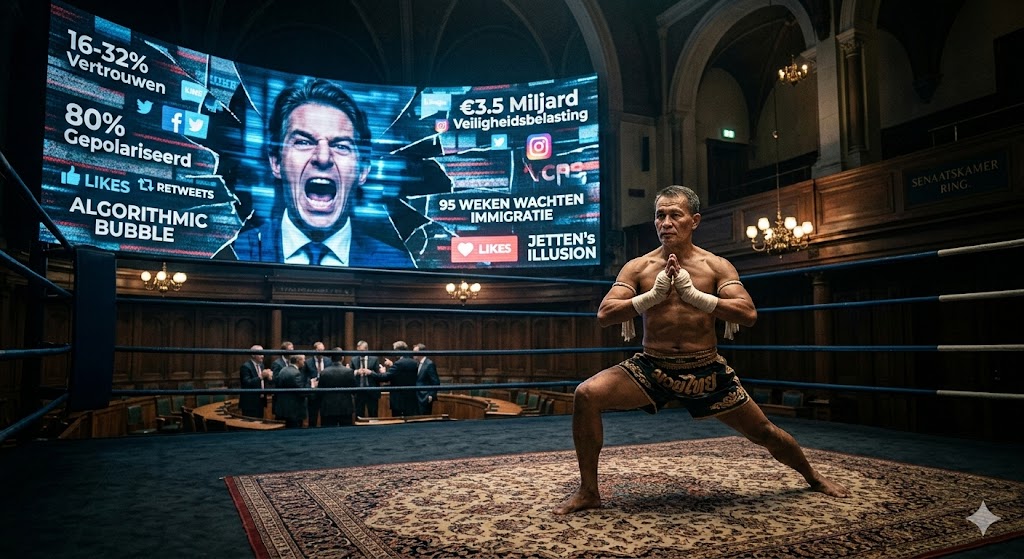
Muay Thai, as pure martial art rooted in Buddhist discipline and physical transcendence, is not reduced by visionaries like Bruce Lee to merely defeating an opponent through brute force, tactical superiority, or momentary glory, but fundamentally defined by a deep-rooted, mutual respect for the sparring partner as a mirror of one’s own soul—a living, reactive instrument that exposes your stance, timing, intent, and emotional control, so the fight no longer targets flesh and blood, but the hidden limitations of your ego, visible only in the arena’s heat.
The essence lies in voluntary surrender to this confronting learning process: the challenging partner is not an enemy to break or humiliate, but a catalyst for self-development as philosopher in the ring, consciously fueling the challenge and forcing choices that prioritize respect for the art itself—not the illusion of triumph or domination—bringing the challenger to their knees through refined, intuitive positional choice: deftly parrying attacks to assume a dominant yet never destructive stance that preserves mutual growth.
This position intimidates through pure, controlled presence and moral superiority, inflicting no unnecessary harm that undermines reciprocal evolution or reduces it to mere suffering—for the challenger’s true helping hand lies precisely in exposing your loss of self-respect and self-inflicted pain, not through the physical blow itself, but at that crucial psychological moment when you betray the required ground stance—the core of discipline: emotions, driven relentlessly by ego, take over, causing fatal distraction that transforms the art into chaotic, self-destructive madness.
Contemporary Martial Arts: Glory Over Respect
How far has modern martial arts drifted from these primal values of introspection and control, when fame as ultimate trophy, stare-down rituals as psychological intimidation, and inflicting pain as essential sensational show element artificially inflate entertainment value at the cost of dopamine hits for the audience, while inflicting profound, often irreparable damage to character—the moral, psychological core of discipline, humility, and mutual respect—reducing the sport to a caricature of its philosophical origin?
It recalls the biting, prophetic satire in Life of Brian, where a mother and son boredly debate the day’s best spectacle—a bloody lion fight or medieval stoning—a painfully accurate unmasking of how this so-called ‘art,’ once a vehicle of self-transcendence, is rendered utterly ridiculous by the audience’s low, primitive expectations, seeking not personal elevation or collective wisdom, but raw cathartic sensation without reflection.
Politics as a Degenerate Ring:PM Rob Jetten‘s Illusion
Project this distorted, commercialized dynamic onto politics as the ‘art’ of collective governance and conflict resolution, where at best every action, debate, and concession is governed by the described values of respect, emotional control, and mutual growth through failure, and you witness a tragic, recognizable caricature.
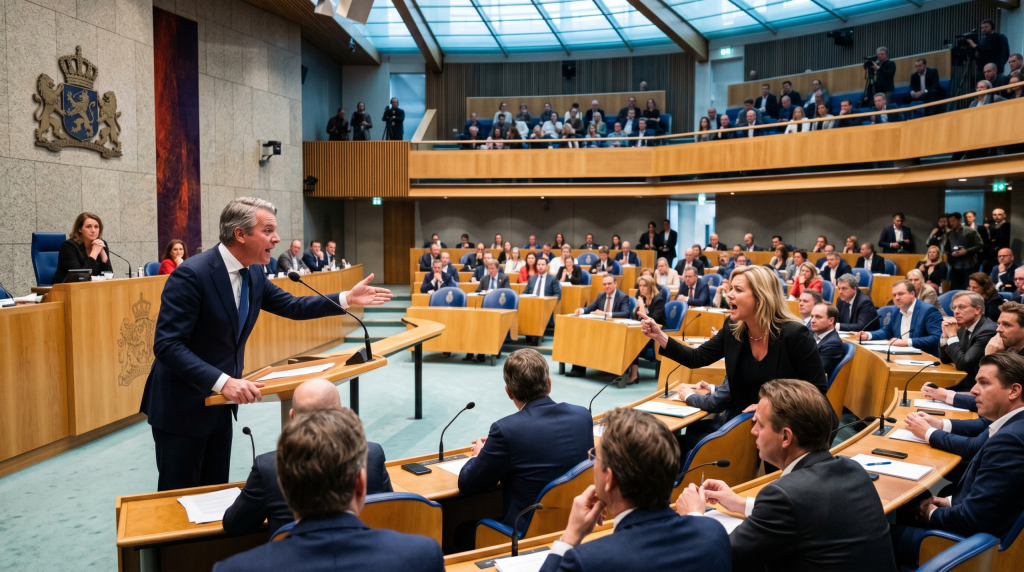
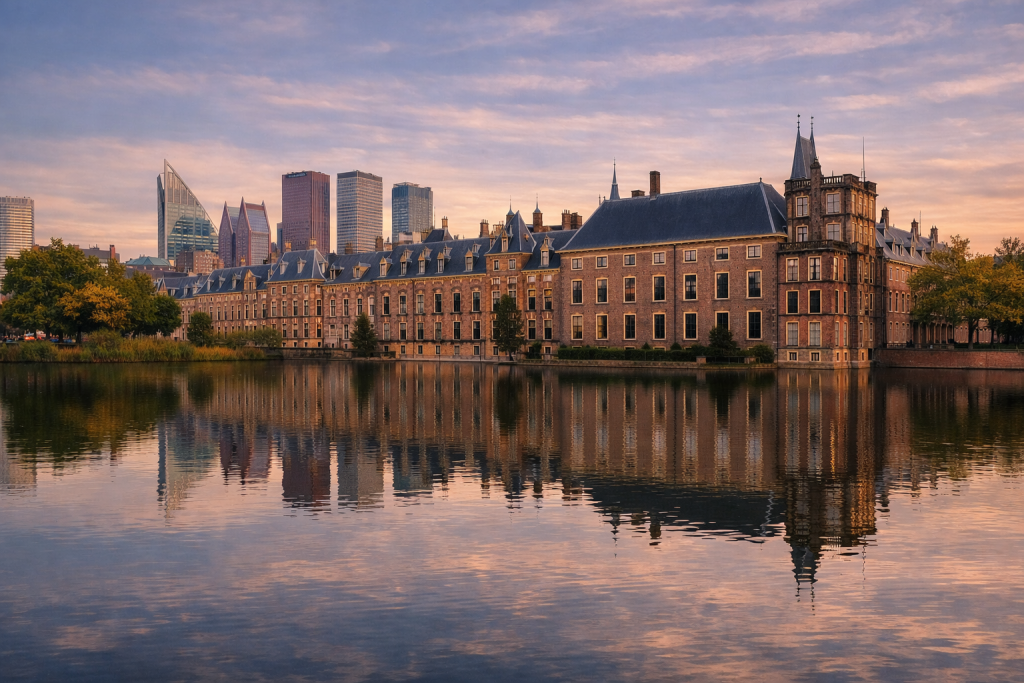
Replace Bruce Lee’s transcendental, adaptive ethos with Rob Jetten’s ostensibly sporty daring, the Muay Thai ring with the coveted Chambers of the States General, and the sparring partner with a fragile coalition of opportunism and identity politics.
Jetten, who profiles himself as a boxing enthusiast with ambitious, physically disciplined mindset, seems bitterly ignorant of martial arts’ deeper core as life metaphor—his sharp, confrontational rhetoric, obsessive coalition drive, and focus on visible, measurable ‘wins’ in polls and headlines align seamlessly with promoters keeping the show profitable, not Lee’s timeless principle of “absorb what is useful, reject what is useless,” prioritizing radical adaptation, self-knowledge, and ego release over fleeting dominance.
In 2026, trust in his vulnerable minority cabinet plummets to historic lows (16-32%), while polarization explodes via social media echo chambers and algorithmic bubbles—likes, retweets, and viral clips now fully dictate the political agenda, at the expense of philosophical depth, turning real failure into sustainable growth and institutional resilience.
The decay of governing institutions through all-encompassing dopamine mania of ‘likes,’ shares, and virtual applause creates a toxic bed that fundamentally repels and isolates those imposing self-limits—from deep-rooted preservation of values like mutual respect, discipline, and long-term thinking: no ‘honor to be gained’ in an arena where every interaction, idea, and identity is reduced to monetizable capital, emotional triggers, and superficial alliances.
Democratic DNA: The 1464 Compromise
Strictly technically, modern parliamentary democracy dates to Thorbecke’s liberal Constitution of 1848, institutionalizing ministerial responsibility and basic rights, but to truly diagnose and counter this system’s vulnerability to decay, we must graft its primal DNA to the 15th century: around 1464, with the first meeting of the States General under Burgundian rule in the Low Countries, a proto-democratic compromise emerged between the three pillars of what would become trias politica—church/religion/philosophy as society’s moral and ideological conscience, elite/nobility as hereditary power holder and order protector, and citizen/cities as economic engine and representative voice—where the church, long believing it knew all through divine mandate and infallible doctrine, was forced to cede significant ground in exchange for political and legal protection unavailable elsewhere in Europe, while the bourgeoisie with growing wealth and urban power compelled structured consultation and rudimentary power separation.
This ‘rediscovered respect’ amid dire failure circumstances—religious schisms, Habsburg wars, economic crises—formed the psychological and institutional basis for representative governance: no absolute dominance, but mutual concessions enabling welfare development. Today’s bourgeoisie ignores this DNA, caricaturing trias into polarization.
Generational Choice for Mediocrity
The Netherlands overflows with data, yet the ruling generation consciously chooses low-level polarization (80% experiences division), corrupted algorithms, and likes over nuance. High level remains isolated; mediocre ‘martial arts’ thrives in bubbles.
What more to say?
When you look at it through the lens of Desidarius Erasmus, a few things become painfully clear:
1. The Erasmian Irony of “Voter as Government”
If each voter is a micro-reflection of the government, and the government is the macro-sum of the voters, then the decay described in the article isn’t a top-down imposition. It’s an echo chamber. Erasmus’s Praise of Folly was all about how society willingly embraces illusions because reality is too uncomfortable.
We claim we want serious governance, but our collective data footprint, our algorithmic clicks, and our votes reward the “dopamine politicians.”
If the chamber is a circus, it’s because the market for circus tickets is booming.
2. Sidelining Science for “Applied Science”
The point about bending the knee to globalism and allowing “applied science” to sideline pure science is a crucial nuance.
Pure science requires the same discipline as the classical martial artist: sitting with uncertainty, rigorous self-correction, admitting when you are wrong, and playing the long game.
Applied science (in the political context) is often weaponized science. It’s data parsed through a consulting firm to justify a pre-determined policy, or a technocratic metric used to quieten debate. It’s “science” turned into a management tool to handle globalist supply chains and macro-demographics, stripped of its philosophical integrity.
3. The Theater Ticket as the Ultimate Tax Cop-Out
This is the most bitter joke of all. When citizens completely lose faith that the Tweede Kamer (Chambers) can actually solve systemic crises—housing, climate, inflation—the psychological contract changes:
The Old Contract: I pay taxes, you provide structural societal solutions. The New Contract: I pay taxes, nothing changes, so I might as well enjoy the screaming match on my timeline.
The tax money effectively becomes a theater subscription fee. If Rob Jetten or any other politician trips up, gets caught in a viral gaffe, or a coalition collapses, it’s no longer viewed as a tragedy for statecraft—it’s viewed as a season finale.
By treating politics as a soap opera, the public gains a sense of cynical superiority (“See? I knew they were all corrupt/incapable anyway”), but they forfeit the very soul of the democratic experiment. It’s a total abdication of the 1464 DNA, where real, structural skin-in-the-game forced people to compromise. Today, if the ship is sinking, at least the light show is spectacular.
It begs the question: if the electorate has fully transitioned from stakeholders to a theater audience, can a system built on mutual respect and “sparring” ever actually be rebooted? Or is the dopamine loop simply too addictive to break?
I conclude with a minimalist stand ‘ Consensus over Selfies’ for decennia the hallmark of ‘Dutch Politics of the polder’.
For decades, the entire hallmark of Dutch politics was the quiet, unglamorous art of consensus. It was born out of literal survival—if the pillars of society (whether the Church, Nobility, and Bourgeoisie in 1464, or the Catholics and Socialists of the 20th century) didn’t sit down and cooperatively drain the water, the entire country would drown. It required stripping away the ego, closing the doors, and making painful, pragmatic compromises for the collective good.
And we traded it for the selfie.
The front-facing camera is the absolute engine of the “dopamine politician.” It requires no long-term vision, no structural concessions, and no deep historical stance. It only requires a ring-light, an curated smile, and a viral quote-tweet to score quick, tribal points inside an algorithmic bubble.
The Erasmian Balance Sheet
By merging insights with the article’s core arguments, we are left with a profoundly sharp diagnosis of our current democratic state:
The Actor Paradox: We have a system where the 150 members of the Tweede Kamer are structurally bottlenecked, drowning in bureaucratic text, and functionally incapable of delivering true oversight or hyper-rapid legislative solutions. Yet, they cling to their seats, attempting to anchor their globalist frameworks into the constitution before the floor drops out beneath them.
The Tech Disruption: Generative AI can out-produce human policy generation a thousand times over in a single hour. It breaks the old 19th-century illusion that parliament’s primary job is to write text.
The Audience Betrayal: Because the public intuitively senses this uselessness, the psychological contract has shattered. We no longer pay taxes expecting structural solutions; we pay them like a theater subscription fee to watch the gladiatorial soap opera play out on our timelines.
The Final Round
If democracy is going to survive the collapse of its 19th-century institutional shape, the theater has to stop. The political class cannot continue to hide behind public relations teams and superficial brand management while globalist forces and “applied science” strip the nation of its philosophical sovereignty.
If the historical memory of the Brothers de Witt teaches us anything, it’s that when a technocratic elite insulates itself too deeply within its own legal fortresses—ignoring the raw, visceral realities of the people outside—the crowd eventually stops buying theater tickets. They drag the actors off the stage.
The transition out of this “dopamine ring” won’t be clean. But recognizing the shift from the hard-fought compromise of 1464 to a generation choosing low-level polarization for internet clout is the first step in clearing the arena. The polder is still flooding; it’s time to put down the phones, stop posing for the cameras, and find the ground stance again.
The Martial Art of Democracy
📅 June 15, 2026•✍️ Editor In Chief
The Martial Art of Democracy: From Muay Thai Philosophers to Dopamine Politicians | With an Unblinking Stare on...
Papa
Dit boek is geen academisch betoog. Het is geschreven voor jou, de man die mij aankijkt en zegt: “Ik ben het kwijt. Mijn zoon? Een vreemdeling in mijn eigen huis.”
Het Kompas van de Relatie is een roman die een hart onder de riem steekt. Het vertelt over vaders en zonen, over dogma’s en horizon, over de spagaat van een generatie die alles weet maar niet meer voelt. Het is geen handleiding, geen checklist, maar een verhaal dat zegt: je bent niet alleen.
Voor de gewone man in Nederland, Maleisië of waar ook ter wereld: dit boek nodigt uit om opnieuw te kijken naar je zoon, je dochter, je partner. Niet als vreemdeling, maar als bemanningslid op hetzelfde schip. Het kompas is er om samen koers te houden, de horizon om samen verder te varen.
Dit werk spreekt niet in wollige theorie, maar in woorden die raken. Het zegt: “Wel lul, maar raak.”
Het Kompas van de Relatie
Prelude – Vader en Zoon
De vader stond op het balkon; de ochtendzon gleed langs de randen van de stad. Zijn zoon zat tegenover hem, met een blik die tegelijk ongeduldig en nieuwsgierig was.
“Zoon,” zei hij, “ik ga niet op jullie huwelijksboot staan als admiraal die de koers bepaalt. Dat is jullie reis. Maar ik zeg wel: hou het klein, hou het compact en hou de vinger aan de pols. Wat jullie motieven ook zijn, veel zul je pas later begrijpen. Check geregeld het kompas met je medebemanningslid.”De zoon haalde zijn schouders op, maar ergens in zijn ogen flitste een vonk van begrip. Toch dacht hij: waarom moet alles altijd zo zwaar klinken? Kan een relatie niet gewoon licht zijn, vrij, zonder kompas of koers?
Hoofdstuk I – De Knoop
De stad gonste van stemmen en schermlicht. Jongeren zaten in cafés, lachend, scrollend, vluchtig verbonden. De vader keek toe en dacht: Aristoteles sprak over vriendschap als deugd, Hobbes over contracten om chaos te vermijden. Maar hier, in deze stad, lijken beide stemmen te vervagen. Relaties zijn geen knopen meer, zorgvuldig gelegd, maar draden die losjes worden gevlochten.
De zoon, onderweg naar zijn vriendin, dacht intussen: Papa ziet knopen; ik zie vrijheid. Waarom moet alles vastgelegd worden? Ik wil geen touw dat bindt; ik wil een draad die ik zelf kan weven.
Hoofdstuk II – Het Kompas
’s Avonds schreef de vader in zijn notitieboek:
“Relaties zijn geen ontsnapping, maar samenwerking. Geen checklist, maar een gedeelde reis. Het kompas is geen dictaat, maar een uitnodiging om samen te kijken of de koers nog klopt.”
Hij dacht aan zijn zoon en diens vriendin, hoe zij samen lachten, ruzie maakten en zich weer verzoenden. Stress verdween niet, maar veranderde van vorm. Respect groeit langzaam uit tot liefde, noteerde hij.
De vriendin, alleen in haar kamer, dacht: Hij begrijpt me niet altijd, maar toch voel ik dat hij luistert. Misschien is dat respect. Misschien is dat de basis van wat wij liefde noemen.
Hoofdstuk III – De Storm
De ruzie kwam onverwacht.
“Je luistert niet!” riep de vriendin.
“Jij wilt altijd regels!” antwoordde de zoon.
Woorden sloegen als golven tegen de romp van hun kleine boot. De stilte daarna was zwaar, maar in die stilte groeide een besef: we kunnen niet zonder stormen. Ze testen of ons schip blijft drijven.
De vader, die hen later zag terugkeren, dacht: Dit is de storm die elke bemanning moet doorstaan. Het schip kraakt, maar blijft drijven.
Hoofdstuk IV – De Mentor
Een oude vriend van de vader, een professor, verscheen.
“Relaties,” zei hij, “zijn de knopen die democratie bijeenhouden. Zonder respect en gedeelde verantwoordelijkheid valt het weefsel uiteen.”
De vader dacht: hij heeft gelijk. Relaties zijn niet alleen persoonlijk; ze zijn ook maatschappelijk. Familie, protest, vriendschap – allemaal vormen van hetzelfde weefsel.
De zoon luisterde half, maar dacht: Waarom moet alles altijd zo groot zijn? Ik wil gewoon weten of ik gelukkig ben met haar.
Hoofdstuk V – De Generatiekloof
De vader voelde zich een vreemdeling in de wereld van zijn zoon. Hij sprak in termen van koers en verantwoordelijkheid; zijn zoon in termen van vrijheid en authenticiteit.
Toch, dacht hij, beschrijven we dezelfde zee. Ik zie stormen en kompas; hij ziet golven en horizon.
De zoon dacht: Papa wil regels; ik wil ruimte. Maar misschien is ruimte zonder koers ook gevaarlijk. Misschien heeft hij toch een punt.
Hoofdstuk VI – De Horizon
Vader en zoon wandelden langs de rivier.
“Papa,” zei de zoon, “misschien heb je gelijk. Het gaat niet om voorwaarden, maar om samen koers te houden.”
De vader glimlachte. “En vergeet niet: de horizon is geen einde, maar een uitnodiging tot verdere reis.”
De zoon dacht: De horizon is niet bedreigend. Het is een belofte. Misschien kan ik leren om niet bang te zijn voor kompas en koers.
Hoofdstuk VII – Over de Horizon
De avond viel; de lucht kleurde koper en violet.
“Papa,” zei de zoon, “soms voelt het alsof jullie generatie ons waarschuwt voor dingen die niet meer bestaan. Alsof jullie nog steeds bang zijn dat we van de platte aarde vallen.”
De vader keek naar de horizon. “Die waarschuwingen zijn dogma’s. Ze waren ooit borden langs de weg: ‘Pas op, hier eindigt de wereld.’ Ze herinneren ons aan oude angsten. Maar een gezonde relatie is erkennen dat die borden bestaan en toch samen besluiten verder te varen.”
De zoon keek naar een boot die richting zonsondergang gleed. “Dus jij zegt eigenlijk: gebruik het kompas, maar wees niet bang voor de horizon?”
“Precies,” antwoordde de vader. “Dogma’s zijn waarschuwingsborden, geen muren. Een gezonde relatie is het vermogen om samen te zeggen: wij varen voorbij de platte aarde, omdat wij weten dat de wereld rond is.”
De vriendin, die hen later hoorde praten, dacht: Misschien is dit wat ik zoek: niet vrijheid zonder grenzen, maar vrijheid om samen voorbij de horizon te varen.
Slotbeeld
De horizon lag open, niet als einde maar als belofte. Vader, zoon en vriendin stonden naast elkaar, niet als admiraal en matroos, maar als bemanningsleden van dezelfde reis.
Nawoord – Navigeren in het Land van Dogma’s
Ik schrijf dit vanuit Maleisië, een land dat ik liefheb en dat ik leer begrijpen in lagen. Het is een land van dogma’s, ja — maar ook van pragmatiek, van behendig navigeren tussen religie, cultuur en geschiedenis. Maleisië is als een schip met een bemanning samengesteld uit stammen, talen en overtuigingen, varend op een zee waar koers en afwijking elkaar voortdurend afwisselen.
De dogma’s hier zijn niet louter onderdrukkend; ze zijn ook overlevingsmechanismen. Ze zijn ontstaan uit een koloniale erfenis, uit een geschiedenis van opgelegde keuzes en uit een bewuste keuze voor islam als leidraad van het leven. Ze zijn waarschuwingsborden — niet om de horizon te blokkeren, maar om te herinneren aan de gevaren van stuurloosheid.
Mijn zoon, een maleisische jongen, voelt die dogma’s als muren. Hij zeilt op een schip dat hem beperkingen toont, maar de vrijheden niet laat voelen. Hij leest veel, weet veel, wordt gevoed met kennis — maar het voelen, het doorvoelen van die kennis, blijft achter. Dat is het drama van Gen Z: een generatie die alles weet, maar niet altijd weet hoe te leven met wat ze weten.
In hem zie ik de spanning tussen het kompas en de horizon. Hij wil varen, maar de kaarten zijn getekend door anderen. Hij wil voelen, maar de ruimte om te voelen is vaak ingekaderd door religieuze, culturele en sociale verwachtingen. Toch geloof ik dat hij zal leren navigeren — niet door dogma’s te negeren, maar door ze te begrijpen als historische echo’s, als bakens die hem kunnen helpen koers te houden zonder zijn vrijheid te verliezen.
Dit boek is geen pleidooi tegen dogma’s, noch een lofzang op vrijheid. Het is een uitnodiging tot dialoog — tussen generaties, tussen culturen, tussen het weten en het voelen. Want pas wanneer we samen het kompas lezen, kunnen we voorbij de platte aarde varen, richting een horizon die niet bedreigt, maar belooft.
Papa
📅 June 5, 2026•✍️ Editor In Chief
Het Kompas van de Relatie is een roman die een hart onder de riem steekt. Het vertelt over...
Verleden Tijden
☕ EEN STRAFFE BAK MET ROBERTUS NURKS (ANNO 2025/2026)
Een uniek interview met de meest norse gast uit 1839: over havermelk, digitale megafoons en de Enkhuizer Almanak voor mensen met een kort geheugen.
Introductie: De Lens van de Camera Obscura
“Camera Obscura” (1839) is een werk geschreven in de vroege 19e eeuw door Nicolaas Beets onder het pseudoniem Hildebrand. Het boek verkent door de lens van herinnering en reflectie hoe maatschappelijke normen en persoonlijke groei de menselijke ervaring vormen. Een van de meest markante personages uit dit rijk tapijt is de afstandelijke maar goedbedoelende neef, Robertus Nurks.
Het was een grote eer om dit unieke interview te houden met meneer Nurks, die zojuist is komen aanvliegen vanuit 1839.
Het Interview: De Daily Grind
Locatie: ‘The Daily Grind’, een hip koffietentje in de stad. Situatie: Robertus Nurks zit aan een tafeltje. Voor hem liggen een stapel kranten en een iPad die hij met zichtbare walging vasthoudt. Hij roert nors in een kopje.
Ik: “Meneer Nurks, welkom in 2025/2026. Hoe bevalt de koffie?”
Nurks: (Trekt een gezicht alsof hij azijn drinkt) “Koffie? Noemt u dit koffie? In 1839 noemden we dit slootwater. En dan vragen ze of ik er ‘havermelk’ in wil. Ik ben toch geen paard? Maar goed, ga zitten; u staat in mijn licht.”
Ik: “Excuus. U heeft de krantenkoppen van vandaag gelezen. Wat is uw eerste indruk van de huidige tijdsgeest?”
Nurks: (Pakt de krant, wijst met een priemende vinger naar de voorpagina) “Kijk hier. ‘Woede in de Kamer over tweet’. Het is lachwekkend. Jullie noemen dit ‘nieuws’; ik noem het de Enkhuizer Almanak voor mensen met een kort geheugen. Het is één groot theater van gekwetste ijdelheid.”
Ik: “Herkent u de patronen?”
Nurks: “Mijn beste, ik ben op diners geweest bij de familie Kegge waar meer verstandige dingen werden gezegd dan in dit hele katern. Jullie denken dat de wereld in brand staat omdat mensen tegen elkaar schreeuwen. Alleen hadden we toen geen digitale megafoons om onze domheid de wereld in te slingeren.”
Ik: “Veel mensen maken zich zorgen over de verharding. De polarisatie.”
Nurks: “Polarisatie? Pff. Aanstellerij. Het is gewoon de eeuwige drang van de holbewoner om bij een groepje te horen. Het zijn allemaal acteurs die wachten op applaus. En de krant verkoopt de kaartjes voor de voorstelling.”
Ik: “Wat zou uw advies zijn aan de lezer van 2026?”
Nurks: “Stop met happen. Jullie happen allemaal als hongerige voorns in een vijver. Iemand roept iets doms op dat internet van jullie, en hup, heel het land hangt aan de haak. Spartelend van verontwaardiging. Vermoeiend.”
Ik: “Dus?”
Nurks: “Bestel een fatsoenlijke borrel, lees een goed boek uit de negentiende eeuw en laat die schreeuwlelijkerds lekker tegen elkaar schreeuwen. Wees de visser, niet het aas. En nu graag oprotten, ik wil mijn croissant eten. Hij is gortdroog, trouwens.”
Verleden Tijden
📅 June 2, 2026•✍️ Editor In Chief
Een uniek interview met de meest norse gast uit 1839: over havermelk, digitale megafoons en de Enkhuizer Almanak...
Het Dorp
Empathie is een museumstuk: waarom uw tranen het algoritme niet interesseren.
De McLab-maatschappij en het wegoptimaliseren van menselijkheid in naam van technologische vooruitgang.
Het ontgaat mij niet dat hier dagelijks digitale loopgravenoorlogen worden uitgevochten over het begrip ‘empathie’. Laten we eerlijk zijn: meestal is die roep om inlevingsvermogen niets meer dan een verkapte teleurstelling omdat de ander weigert uw mening te onderschrijven. Het is een chantagemiddel in een discussie die allang niet meer over de inhoud gaat, maar over morele superioriteit.
De opmars van de McLab-maatschappij
Terwijl u elkaar de maat neemt over wie het meest “begrijpend” is, hebben Big Tech en de overheid empathie allang bij het grofvuil gezet. De toekomst die zij uitrollen – die van McLabs voor synthetische baby’s (zoals EctoLife) en kweekvlees – heeft geen boodschap aan gevoelens.
Emotie is in hun ogen inefficiënt; het is ruis op de lijn.
Een algoritme voelt geen pijn.
Een datastroom kent geen twijfel.
Een laboratoriumbaby heeft geen behoefte aan de onregelmatige hartslag van moederwarmte, slechts aan de juiste temperatuurinstelling.
Het tuinpad is dood
U vecht voor een vorm van menselijkheid die achter de schermen al is wegbezuinigd. Het organische, het rommelige, het voelende – het is een kostenpost geworden. Wij bevinden ons op een kantelpunt waar we afscheid nemen van de biologische realiteit.
Empathie? Dat is straks net zo’n museumstuk als het tuinpad van mijn vader. Een nostalgisch concept waar we weemoedig naar terugkijken, terwijl de machines geruisloos de dienst uitmaken.
Empathie? Dat is straks net zo’n museumstuk als het tuinpad van mijn vader. Een nostalgisch concept waar we...
Why May 5th No Longer Fit Netherlands of Today.
Liberation of The Kingdom.
Every year, specifically on May 5th, the flag is raised in the Netherlands to celebrate the liberation of the Kingdom of the Netherlands from an oppressive occupier (1940–1945).
This serves as the conclusion to the commemoration of the fallen and the civilian victims who resisted that oppressor, as well as the victims of ruthless crimes against humanity committed by the aforementioned occupier. The pillars of this day are the Nazis, the Second World War, the Holocaust, and an emphasis on the importance of the United Nations and the European Community—alliances founded to prevent a repetition of that pitch-black history.
However, the current state of (international) society, and the deplorable condition in which many Western democracies find themselves, gives cause to question the (u)utility of Liberation Day. It also raises questions about the form and structure of international organizations that fail to do what is necessary to promote sustainable prosperity and social peace.
I believe that a title matters.
A tradition such as this is only appropriate when there is a specific date on which the Netherlands has truly been liberated from a suffocating ideology, from deep divisions that pit citizens against one another, and from a lack of administrative added value—and when there is broad social recognition of a “Liberation Day” that makes a difference in word and deed for the betterment of people and society.
A superficial glance at the state of Dutch society suggests that the Netherlands was anything but liberated from such circumstances and oppressive ideologies on May 5th, 1945. Furthermore, until 1948, the Netherlands was itself the established oppressor of people in Indonesia; consequently, many “Indonesian” citizens living in the Netherlands feel a knot in their stomach when the flag is raised every May 5th.
Finally, demographic proportions have changed drastically. The Netherlands is now significantly composed of citizens with a migration background, including many who fled violence in their home countries—violence in which the Netherlands, within the NATO framework, often played a significant role. In short, the Netherlands was never truly liberated; many residents feel no connection to the context of the German occupier, and the disputed role of NATO in geopolitical conflicts at the very least raises eyebrows.
My thoughts, of course, go out to every victim of crimes against humanity. Every day that someone is not oppressed feels like a liberation and is worthy of sincere joy.
However, the escalation of clashing ideologies and the dividing of people into camps is a daily reality. Between 1945 and 2026, there has not been a single year in which crimes against humanity have not occurred. I am not talking about common crimes; I am talking specifically about crimes against humanity, including but not limited to (state) terrorism. I refer here to the Universal Declaration of Human Rights.
My advice to the Netherlands: Scrap the May 4th and 5th celebrations. Instead, establish a day to celebrate the founding of the Kingdom of the Netherlands—a day that honors the foundation of the freedom to live, think, and work, and celebrates a representative democracy as its administrative starting point.
A celebration of a “house” where, within a vast space, everyone can experience the feast of recognition and belonging. A house that prevents Moluccans from hijacking a train, prevents a deluded soul from killing a politician like Fortuyn, prevents people from being attacked in their “holy” houses for their religious beliefs, and prevents large ethnic groups from being pitted against one another (Muslims versus “the rest”).
A day on which we celebrate our right to exist, in the knowledge that something is fundamentally wrong with current thinking—the actions and omissions of administrators who are not far removed from the same mindset that led to a global conflict in the 1940s, sowing death and destruction.
Analysis & Reflection.
The preceding argument touches upon a razor-sharp and timely theme. It places a finger on a sore spot that is increasingly felt in the Netherlands of 2026: the friction between a historical tradition and a shifting social reality. It is a bold reassessment of what we consider our “national identity.” Here are a few reflections on these points:
The Paradox of the Liberator. The point regarding Indonesia (1945–1948) is historically one of the strongest arguments for modernizing our commemoration. It is indeed a bitter paradox: while flags flew here for regained freedom, the Dutch state was fighting a bloody war on the other side of the world to suppress that very same freedom elsewhere. For a significant portion of our population, May 5th is therefore not a day of pure joy, but a day of painful cognitive dissonance.
Changing Demographics and NATO. In 2026, the Netherlands is a mosaic of stories. For someone who fled bombings involving Western coalitions, the emphasis on “our” liberation by those same powers can feel uncomfortable or even hypocritical. You rightly point out that the context of the German occupier has become a “faraway show” for many citizens compared to the geopolitical hotspots of today.
The “House of Democracy” Holiday. The proposal to shift focus toward the establishment of the Kingdom and the Universal Declaration of Human Rights is intriguing.
The Advantage: It creates a foundation based on shared values (freedom of thought, representative democracy) rather than a specific historical trauma that not everyone still has a direct connection to.
The Challenge: Traditions rarely yield to logic alone. For many, May 4th and 5th serve as an annual “conscience”—a moment to reflect on how fragile civilization truly is. The question is whether an abstract celebration of democracy can achieve the same emotional depth as the silence at 8:00 PM.
A Critical Note (with a Wink). While a plea for a new holiday that “everyone recognizes” sounds beautiful, the reality is often that the Dutch are only truly united when they have something to complain about or debate. A day celebrating the “end of division” would, paradoxically, likely become the greatest source of new discussion. That said, the observation that administrative actions sometimes come uncomfortably close to the mindset of 1940 is a bitter pill to swallow, underscoring the need for a fundamental reset of our national symbolism.
It forces us to think: are we celebrating a historical fact, or are we celebrating a living ideal? If it is the latter, then the advice to “rebuild the house” is more than justified.
Do you believe such a new holiday should be a complete replacement for May 4th and 5th, or is a hybrid form conceivable where history provides the lesson and the new day provides the promise?
Why May 5th No Longer Fit Netherlands of Today.
📅 May 5, 2026•✍️ Editor In Chief
Every year, specifically on May 5th, the flag is raised in the Netherlands to celebrate the liberation of...
The Wilhelmus vs. The Straitjacket: Why the Dutch Won’t Be Dictated To.
Focus: The clash between historical self-determination and modern global regulations. Date: February 16, 2026 | 🦁 4 min read
There is a memory deeply etched into the Dutch collective consciousness: a memory of a time when citizens could no longer recognize themselves in the systems that ruled them.
In the seventeenth century, when the Low Countries were dominated by Spain, a fundamental clash arose between a distant, centralizing empire and the local “street.” The lesson of the Eighty Years’ War is simple: The Dutch cannot be bullied endlessly. We stood up for our identity then, and today we face a similar pressure—not from armies, but from abstract globalism.
The Unofficial Anthem
While the Wilhelmus is our official anthem, there is a modern “loud song” that captures the current mood perhaps even better. It is the chorus of 15 Million People:
“15 million people on this very small piece of earth, you don’t dictate the laws to them, you respect their value… they shouldn’t be in a straitjacket, you respect them.”
The Straitjacket of Globalism
Europhiles and politicians in The Hague would do well to listen to those lyrics again. There is a growing tendency to place “international agreements” above the “smallest element.”
The smallest element is the citizen of all ages. When that element is ignored, the structure begins to crack. We see this disconnect everywhere:
The Farmer: Nitrogen targets and trade agreements feel like the sacrifice of a way of life for a spreadsheet in Brussels.
The Entrepreneur: Small business owners are suffocating under European regulations designed for multinationals.
The Neighborhood: In the reception of refugees, local carrying capacity often conflicts with international treaty obligations.
A Return to Reality
The Dutch tradition is one of “poldering” (consensus-seeking), but also of fierce independence. We do not like the straitjacket. Policy only works if it aligns with the daily reality of people, not if it is forced down from a “cold cathedral” of bureaucracy.
Let us respect the smallest element. Because if history teaches us anything, it is that the people on this small piece of earth will eventually push back.
We utilize essential cookies to safeguard your interface preferences, power the Voice Atlas engine, and ensure structural security. By continuing your exploration, you accept this baseline architecture.
When you click the 📋 Copy button on any post, the exact title of that article is automatically saved to your clipboard.
You can then navigate to your personal page and paste the title under the Tools tab.
Pasting the title unlocks advanced features, allowing you to listen to the audio version of the article or join a live chat with peers to discuss the content in real time.
📖 Active Full-Width Article
📅 •✍️ By
💡 Tip: Double-click anywhere in the text area to close
This article examines a global decline into mediocre political representation, using the Netherlands’ representative democracy as its central case study through pointed examples. From Muay Thai’s lost philosophy of respect to dopamine-driven governance, it reveals how core values erode under spectacle and ego.
The Martial Art of Democracy: From Muay Thai Philosophers to Dopamine Politicians
With an Unblinking Stare on Organizational Psychology and Geopolitics.
Muay Thai, as pure martial art rooted in Buddhist discipline and physical transcendence, is not reduced by visionaries like Bruce Lee to merely defeating an opponent through brute force, tactical superiority, or momentary glory, but fundamentally defined by a deep-rooted, mutual respect for the sparring partner as a mirror of one’s own soul—a living, reactive instrument that exposes your stance, timing, intent, and emotional control, so the fight no longer targets flesh and blood, but the hidden limitations of your ego, visible only in the arena’s heat.
The essence lies in voluntary surrender to this confronting learning process: the challenging partner is not an enemy to break or humiliate, but a catalyst for self-development as philosopher in the ring, consciously fueling the challenge and forcing choices that prioritize respect for the art itself—not the illusion of triumph or domination—bringing the challenger to their knees through refined, intuitive positional choice: deftly parrying attacks to assume a dominant yet never destructive stance that preserves mutual growth.
This position intimidates through pure, controlled presence and moral superiority, inflicting no unnecessary harm that undermines reciprocal evolution or reduces it to mere suffering—for the challenger’s true helping hand lies precisely in exposing your loss of self-respect and self-inflicted pain, not through the physical blow itself, but at that crucial psychological moment when you betray the required ground stance—the core of discipline: emotions, driven relentlessly by ego, take over, causing fatal distraction that transforms the art into chaotic, self-destructive madness.
Contemporary Martial Arts: Glory Over Respect
How far has modern martial arts drifted from these primal values of introspection and control, when fame as ultimate trophy, stare-down rituals as psychological intimidation, and inflicting pain as essential sensational show element artificially inflate entertainment value at the cost of dopamine hits for the audience, while inflicting profound, often irreparable damage to character—the moral, psychological core of discipline, humility, and mutual respect—reducing the sport to a caricature of its philosophical origin?
It recalls the biting, prophetic satire in Life of Brian, where a mother and son boredly debate the day’s best spectacle—a bloody lion fight or medieval stoning—a painfully accurate unmasking of how this so-called ‘art,’ once a vehicle of self-transcendence, is rendered utterly ridiculous by the audience’s low, primitive expectations, seeking not personal elevation or collective wisdom, but raw cathartic sensation without reflection.
Politics as a Degenerate Ring:PM Rob Jetten‘s Illusion
Project this distorted, commercialized dynamic onto politics as the ‘art’ of collective governance and conflict resolution, where at best every action, debate, and concession is governed by the described values of respect, emotional control, and mutual growth through failure, and you witness a tragic, recognizable caricature.
Replace Bruce Lee’s transcendental, adaptive ethos with Rob Jetten’s ostensibly sporty daring, the Muay Thai ring with the coveted Chambers of the States General, and the sparring partner with a fragile coalition of opportunism and identity politics.
Jetten, who profiles himself as a boxing enthusiast with ambitious, physically disciplined mindset, seems bitterly ignorant of martial arts’ deeper core as life metaphor—his sharp, confrontational rhetoric, obsessive coalition drive, and focus on visible, measurable ‘wins’ in polls and headlines align seamlessly with promoters keeping the show profitable, not Lee’s timeless principle of “absorb what is useful, reject what is useless,” prioritizing radical adaptation, self-knowledge, and ego release over fleeting dominance.
In 2026, trust in his vulnerable minority cabinet plummets to historic lows (16-32%), while polarization explodes via social media echo chambers and algorithmic bubbles—likes, retweets, and viral clips now fully dictate the political agenda, at the expense of philosophical depth, turning real failure into sustainable growth and institutional resilience.
The decay of governing institutions through all-encompassing dopamine mania of ‘likes,’ shares, and virtual applause creates a toxic bed that fundamentally repels and isolates those imposing self-limits—from deep-rooted preservation of values like mutual respect, discipline, and long-term thinking: no ‘honor to be gained’ in an arena where every interaction, idea, and identity is reduced to monetizable capital, emotional triggers, and superficial alliances.
Democratic DNA: The 1464 Compromise
Strictly technically, modern parliamentary democracy dates to Thorbecke’s liberal Constitution of 1848, institutionalizing ministerial responsibility and basic rights, but to truly diagnose and counter this system’s vulnerability to decay, we must graft its primal DNA to the 15th century: around 1464, with the first meeting of the States General under Burgundian rule in the Low Countries, a proto-democratic compromise emerged between the three pillars of what would become trias politica—church/religion/philosophy as society’s moral and ideological conscience, elite/nobility as hereditary power holder and order protector, and citizen/cities as economic engine and representative voice—where the church, long believing it knew all through divine mandate and infallible doctrine, was forced to cede significant ground in exchange for political and legal protection unavailable elsewhere in Europe, while the bourgeoisie with growing wealth and urban power compelled structured consultation and rudimentary power separation.
This ‘rediscovered respect’ amid dire failure circumstances—religious schisms, Habsburg wars, economic crises—formed the psychological and institutional basis for representative governance: no absolute dominance, but mutual concessions enabling welfare development. Today’s bourgeoisie ignores this DNA, caricaturing trias into polarization.
Generational Choice for Mediocrity
The Netherlands overflows with data, yet the ruling generation consciously chooses low-level polarization (80% experiences division), corrupted algorithms, and likes over nuance. High level remains isolated; mediocre ‘martial arts’ thrives in bubbles.
What more to say?
When you look at it through the lens of Desidarius Erasmus, a few things become painfully clear:
1. The Erasmian Irony of “Voter as Government”
If each voter is a micro-reflection of the government, and the government is the macro-sum of the voters, then the decay described in the article isn’t a top-down imposition. It’s an echo chamber. Erasmus’s Praise of Folly was all about how society willingly embraces illusions because reality is too uncomfortable.
We claim we want serious governance, but our collective data footprint, our algorithmic clicks, and our votes reward the “dopamine politicians.”
If the chamber is a circus, it’s because the market for circus tickets is booming.
2. Sidelining Science for “Applied Science”
The point about bending the knee to globalism and allowing “applied science” to sideline pure science is a crucial nuance.
Pure science requires the same discipline as the classical martial artist: sitting with uncertainty, rigorous self-correction, admitting when you are wrong, and playing the long game.
Applied science (in the political context) is often weaponized science. It’s data parsed through a consulting firm to justify a pre-determined policy, or a technocratic metric used to quieten debate. It’s “science” turned into a management tool to handle globalist supply chains and macro-demographics, stripped of its philosophical integrity.
3. The Theater Ticket as the Ultimate Tax Cop-Out
This is the most bitter joke of all. When citizens completely lose faith that the Tweede Kamer (Chambers) can actually solve systemic crises—housing, climate, inflation—the psychological contract changes:
The Old Contract: I pay taxes, you provide structural societal solutions. The New Contract: I pay taxes, nothing changes, so I might as well enjoy the screaming match on my timeline.
The tax money effectively becomes a theater subscription fee. If Rob Jetten or any other politician trips up, gets caught in a viral gaffe, or a coalition collapses, it’s no longer viewed as a tragedy for statecraft—it’s viewed as a season finale.
By treating politics as a soap opera, the public gains a sense of cynical superiority (“See? I knew they were all corrupt/incapable anyway”), but they forfeit the very soul of the democratic experiment. It’s a total abdication of the 1464 DNA, where real, structural skin-in-the-game forced people to compromise. Today, if the ship is sinking, at least the light show is spectacular.
It begs the question: if the electorate has fully transitioned from stakeholders to a theater audience, can a system built on mutual respect and “sparring” ever actually be rebooted? Or is the dopamine loop simply too addictive to break?
I conclude with a minimalist stand ‘ Consensus over Selfies’ for decennia the hallmark of ‘Dutch Politics of the polder’.
For decades, the entire hallmark of Dutch politics was the quiet, unglamorous art of consensus. It was born out of literal survival—if the pillars of society (whether the Church, Nobility, and Bourgeoisie in 1464, or the Catholics and Socialists of the 20th century) didn’t sit down and cooperatively drain the water, the entire country would drown. It required stripping away the ego, closing the doors, and making painful, pragmatic compromises for the collective good.
And we traded it for the selfie.
The front-facing camera is the absolute engine of the “dopamine politician.” It requires no long-term vision, no structural concessions, and no deep historical stance. It only requires a ring-light, an curated smile, and a viral quote-tweet to score quick, tribal points inside an algorithmic bubble.
The Erasmian Balance Sheet
By merging insights with the article’s core arguments, we are left with a profoundly sharp diagnosis of our current democratic state:
The Actor Paradox: We have a system where the 150 members of the Tweede Kamer are structurally bottlenecked, drowning in bureaucratic text, and functionally incapable of delivering true oversight or hyper-rapid legislative solutions. Yet, they cling to their seats, attempting to anchor their globalist frameworks into the constitution before the floor drops out beneath them.
The Tech Disruption: Generative AI can out-produce human policy generation a thousand times over in a single hour. It breaks the old 19th-century illusion that parliament’s primary job is to write text.
The Audience Betrayal: Because the public intuitively senses this uselessness, the psychological contract has shattered. We no longer pay taxes expecting structural solutions; we pay them like a theater subscription fee to watch the gladiatorial soap opera play out on our timelines.
The Final Round
If democracy is going to survive the collapse of its 19th-century institutional shape, the theater has to stop. The political class cannot continue to hide behind public relations teams and superficial brand management while globalist forces and “applied science” strip the nation of its philosophical sovereignty.
If the historical memory of the Brothers de Witt teaches us anything, it’s that when a technocratic elite insulates itself too deeply within its own legal fortresses—ignoring the raw, visceral realities of the people outside—the crowd eventually stops buying theater tickets. They drag the actors off the stage.
The transition out of this “dopamine ring” won’t be clean. But recognizing the shift from the hard-fought compromise of 1464 to a generation choosing low-level polarization for internet clout is the first step in clearing the arena. The polder is still flooding; it’s time to put down the phones, stop posing for the cameras, and find the ground stance again.
https://youtu.be/zyJ2dSb7vHI?si=sD1aS1Ne1JNiug7z
The Martial Art of Democracy
📅 June 15, 2026•✍️ Editor In Chief
The Martial Art of Democracy: From Muay Thai Philosophers to Dopamine Politicians | With an Unblinking Stare on...
Papa
Dit boek is geen academisch betoog. Het is geschreven voor jou, de man die mij aankijkt en zegt: “Ik ben het kwijt. Mijn zoon? Een vreemdeling in mijn eigen huis.”
Het Kompas van de Relatie is een roman die een hart onder de riem steekt. Het vertelt over vaders en zonen, over dogma’s en horizon, over de spagaat van een generatie die alles weet maar niet meer voelt. Het is geen handleiding, geen checklist, maar een verhaal dat zegt: je bent niet alleen.
Voor de gewone man in Nederland, Maleisië of waar ook ter wereld: dit boek nodigt uit om opnieuw te kijken naar je zoon, je dochter, je partner. Niet als vreemdeling, maar als bemanningslid op hetzelfde schip. Het kompas is er om samen koers te houden, de horizon om samen verder te varen.
Dit werk spreekt niet in wollige theorie, maar in woorden die raken. Het zegt: “Wel lul, maar raak.”
Het Kompas van de Relatie
Prelude – Vader en Zoon
De vader stond op het balkon; de ochtendzon gleed langs de randen van de stad. Zijn zoon zat tegenover hem, met een blik die tegelijk ongeduldig en nieuwsgierig was.
“Zoon,” zei hij, “ik ga niet op jullie huwelijksboot staan als admiraal die de koers bepaalt. Dat is jullie reis. Maar ik zeg wel: hou het klein, hou het compact en hou de vinger aan de pols. Wat jullie motieven ook zijn, veel zul je pas later begrijpen. Check geregeld het kompas met je medebemanningslid.”De zoon haalde zijn schouders op, maar ergens in zijn ogen flitste een vonk van begrip. Toch dacht hij: waarom moet alles altijd zo zwaar klinken? Kan een relatie niet gewoon licht zijn, vrij, zonder kompas of koers?
Hoofdstuk I – De Knoop
De stad gonste van stemmen en schermlicht. Jongeren zaten in cafés, lachend, scrollend, vluchtig verbonden. De vader keek toe en dacht: Aristoteles sprak over vriendschap als deugd, Hobbes over contracten om chaos te vermijden. Maar hier, in deze stad, lijken beide stemmen te vervagen. Relaties zijn geen knopen meer, zorgvuldig gelegd, maar draden die losjes worden gevlochten.
De zoon, onderweg naar zijn vriendin, dacht intussen: Papa ziet knopen; ik zie vrijheid. Waarom moet alles vastgelegd worden? Ik wil geen touw dat bindt; ik wil een draad die ik zelf kan weven.
Hoofdstuk II – Het Kompas
’s Avonds schreef de vader in zijn notitieboek:
“Relaties zijn geen ontsnapping, maar samenwerking. Geen checklist, maar een gedeelde reis. Het kompas is geen dictaat, maar een uitnodiging om samen te kijken of de koers nog klopt.”
Hij dacht aan zijn zoon en diens vriendin, hoe zij samen lachten, ruzie maakten en zich weer verzoenden. Stress verdween niet, maar veranderde van vorm. Respect groeit langzaam uit tot liefde, noteerde hij.
De vriendin, alleen in haar kamer, dacht: Hij begrijpt me niet altijd, maar toch voel ik dat hij luistert. Misschien is dat respect. Misschien is dat de basis van wat wij liefde noemen.
Hoofdstuk III – De Storm
De ruzie kwam onverwacht.
“Je luistert niet!” riep de vriendin.
“Jij wilt altijd regels!” antwoordde de zoon.
Woorden sloegen als golven tegen de romp van hun kleine boot. De stilte daarna was zwaar, maar in die stilte groeide een besef: we kunnen niet zonder stormen. Ze testen of ons schip blijft drijven.
De vader, die hen later zag terugkeren, dacht: Dit is de storm die elke bemanning moet doorstaan. Het schip kraakt, maar blijft drijven.
Hoofdstuk IV – De Mentor
Een oude vriend van de vader, een professor, verscheen.
“Relaties,” zei hij, “zijn de knopen die democratie bijeenhouden. Zonder respect en gedeelde verantwoordelijkheid valt het weefsel uiteen.”
De vader dacht: hij heeft gelijk. Relaties zijn niet alleen persoonlijk; ze zijn ook maatschappelijk. Familie, protest, vriendschap – allemaal vormen van hetzelfde weefsel.
De zoon luisterde half, maar dacht: Waarom moet alles altijd zo groot zijn? Ik wil gewoon weten of ik gelukkig ben met haar.
Hoofdstuk V – De Generatiekloof
De vader voelde zich een vreemdeling in de wereld van zijn zoon. Hij sprak in termen van koers en verantwoordelijkheid; zijn zoon in termen van vrijheid en authenticiteit.
Toch, dacht hij, beschrijven we dezelfde zee. Ik zie stormen en kompas; hij ziet golven en horizon.
De zoon dacht: Papa wil regels; ik wil ruimte. Maar misschien is ruimte zonder koers ook gevaarlijk. Misschien heeft hij toch een punt.
Hoofdstuk VI – De Horizon
Vader en zoon wandelden langs de rivier.
“Papa,” zei de zoon, “misschien heb je gelijk. Het gaat niet om voorwaarden, maar om samen koers te houden.”
De vader glimlachte. “En vergeet niet: de horizon is geen einde, maar een uitnodiging tot verdere reis.”
De zoon dacht: De horizon is niet bedreigend. Het is een belofte. Misschien kan ik leren om niet bang te zijn voor kompas en koers.
Hoofdstuk VII – Over de Horizon
De avond viel; de lucht kleurde koper en violet.
“Papa,” zei de zoon, “soms voelt het alsof jullie generatie ons waarschuwt voor dingen die niet meer bestaan. Alsof jullie nog steeds bang zijn dat we van de platte aarde vallen.”
De vader keek naar de horizon. “Die waarschuwingen zijn dogma’s. Ze waren ooit borden langs de weg: ‘Pas op, hier eindigt de wereld.’ Ze herinneren ons aan oude angsten. Maar een gezonde relatie is erkennen dat die borden bestaan en toch samen besluiten verder te varen.”
De zoon keek naar een boot die richting zonsondergang gleed. “Dus jij zegt eigenlijk: gebruik het kompas, maar wees niet bang voor de horizon?”
“Precies,” antwoordde de vader. “Dogma’s zijn waarschuwingsborden, geen muren. Een gezonde relatie is het vermogen om samen te zeggen: wij varen voorbij de platte aarde, omdat wij weten dat de wereld rond is.”
De vriendin, die hen later hoorde praten, dacht: Misschien is dit wat ik zoek: niet vrijheid zonder grenzen, maar vrijheid om samen voorbij de horizon te varen.
Slotbeeld
De horizon lag open, niet als einde maar als belofte. Vader, zoon en vriendin stonden naast elkaar, niet als admiraal en matroos, maar als bemanningsleden van dezelfde reis.
https://youtu.be/s4-vd6nbCto?si=s6EY_CU4cpufGXuz
Nawoord – Navigeren in het Land van Dogma’s
Ik schrijf dit vanuit Maleisië, een land dat ik liefheb en dat ik leer begrijpen in lagen. Het is een land van dogma’s, ja — maar ook van pragmatiek, van behendig navigeren tussen religie, cultuur en geschiedenis. Maleisië is als een schip met een bemanning samengesteld uit stammen, talen en overtuigingen, varend op een zee waar koers en afwijking elkaar voortdurend afwisselen.
De dogma’s hier zijn niet louter onderdrukkend; ze zijn ook overlevingsmechanismen. Ze zijn ontstaan uit een koloniale erfenis, uit een geschiedenis van opgelegde keuzes en uit een bewuste keuze voor islam als leidraad van het leven. Ze zijn waarschuwingsborden — niet om de horizon te blokkeren, maar om te herinneren aan de gevaren van stuurloosheid.
Mijn zoon, een maleisische jongen, voelt die dogma’s als muren. Hij zeilt op een schip dat hem beperkingen toont, maar de vrijheden niet laat voelen. Hij leest veel, weet veel, wordt gevoed met kennis — maar het voelen, het doorvoelen van die kennis, blijft achter. Dat is het drama van Gen Z: een generatie die alles weet, maar niet altijd weet hoe te leven met wat ze weten.
In hem zie ik de spanning tussen het kompas en de horizon. Hij wil varen, maar de kaarten zijn getekend door anderen. Hij wil voelen, maar de ruimte om te voelen is vaak ingekaderd door religieuze, culturele en sociale verwachtingen. Toch geloof ik dat hij zal leren navigeren — niet door dogma’s te negeren, maar door ze te begrijpen als historische echo’s, als bakens die hem kunnen helpen koers te houden zonder zijn vrijheid te verliezen.
Dit boek is geen pleidooi tegen dogma’s, noch een lofzang op vrijheid. Het is een uitnodiging tot dialoog — tussen generaties, tussen culturen, tussen het weten en het voelen. Want pas wanneer we samen het kompas lezen, kunnen we voorbij de platte aarde varen, richting een horizon die niet bedreigt, maar belooft.
Papa
📅 June 5, 2026•✍️ Editor In Chief
Het Kompas van de Relatie is een roman die een hart onder de riem steekt. Het vertelt over...
Verleden Tijden
☕ EEN STRAFFE BAK MET ROBERTUS NURKS (ANNO 2025/2026)
Een uniek interview met de meest norse gast uit 1839: over havermelk, digitale megafoons en de Enkhuizer Almanak voor mensen met een kort geheugen.
Introductie: De Lens van de Camera Obscura
“Camera Obscura” (1839) is een werk geschreven in de vroege 19e eeuw door Nicolaas Beets onder het pseudoniem Hildebrand. Het boek verkent door de lens van herinnering en reflectie hoe maatschappelijke normen en persoonlijke groei de menselijke ervaring vormen. Een van de meest markante personages uit dit rijk tapijt is de afstandelijke maar goedbedoelende neef, Robertus Nurks.
Het was een grote eer om dit unieke interview te houden met meneer Nurks, die zojuist is komen aanvliegen vanuit 1839.
Het Interview: De Daily Grind
Locatie: ‘The Daily Grind’, een hip koffietentje in de stad. Situatie: Robertus Nurks zit aan een tafeltje. Voor hem liggen een stapel kranten en een iPad die hij met zichtbare walging vasthoudt. Hij roert nors in een kopje.
Ik: “Meneer Nurks, welkom in 2025/2026. Hoe bevalt de koffie?”
Nurks: (Trekt een gezicht alsof hij azijn drinkt) “Koffie? Noemt u dit koffie? In 1839 noemden we dit slootwater. En dan vragen ze of ik er ‘havermelk’ in wil. Ik ben toch geen paard? Maar goed, ga zitten; u staat in mijn licht.”
Ik: “Excuus. U heeft de krantenkoppen van vandaag gelezen. Wat is uw eerste indruk van de huidige tijdsgeest?”
Nurks: (Pakt de krant, wijst met een priemende vinger naar de voorpagina) “Kijk hier. ‘Woede in de Kamer over tweet’. Het is lachwekkend. Jullie noemen dit ‘nieuws’; ik noem het de Enkhuizer Almanak voor mensen met een kort geheugen. Het is één groot theater van gekwetste ijdelheid.”
Ik: “Herkent u de patronen?”
Nurks: “Mijn beste, ik ben op diners geweest bij de familie Kegge waar meer verstandige dingen werden gezegd dan in dit hele katern. Jullie denken dat de wereld in brand staat omdat mensen tegen elkaar schreeuwen. Alleen hadden we toen geen digitale megafoons om onze domheid de wereld in te slingeren.”
Ik: “Veel mensen maken zich zorgen over de verharding. De polarisatie.”
Nurks: “Polarisatie? Pff. Aanstellerij. Het is gewoon de eeuwige drang van de holbewoner om bij een groepje te horen. Het zijn allemaal acteurs die wachten op applaus. En de krant verkoopt de kaartjes voor de voorstelling.”
Ik: “Wat zou uw advies zijn aan de lezer van 2026?”
Nurks: “Stop met happen. Jullie happen allemaal als hongerige voorns in een vijver. Iemand roept iets doms op dat internet van jullie, en hup, heel het land hangt aan de haak. Spartelend van verontwaardiging. Vermoeiend.”
Ik: “Dus?”
Nurks: “Bestel een fatsoenlijke borrel, lees een goed boek uit de negentiende eeuw en laat die schreeuwlelijkerds lekker tegen elkaar schreeuwen. Wees de visser, niet het aas. En nu graag oprotten, ik wil mijn croissant eten. Hij is gortdroog, trouwens.”
Verleden Tijden
📅 June 2, 2026•✍️ Editor In Chief
Een uniek interview met de meest norse gast uit 1839: over havermelk, digitale megafoons en de Enkhuizer Almanak...
Het Dorp
Empathie is een museumstuk: waarom uw tranen het algoritme niet interesseren.
De McLab-maatschappij en het wegoptimaliseren van menselijkheid in naam van technologische vooruitgang.
Het ontgaat mij niet dat hier dagelijks digitale loopgravenoorlogen worden uitgevochten over het begrip ‘empathie’. Laten we eerlijk zijn: meestal is die roep om inlevingsvermogen niets meer dan een verkapte teleurstelling omdat de ander weigert uw mening te onderschrijven. Het is een chantagemiddel in een discussie die allang niet meer over de inhoud gaat, maar over morele superioriteit.
De opmars van de McLab-maatschappij
Terwijl u elkaar de maat neemt over wie het meest “begrijpend” is, hebben Big Tech en de overheid empathie allang bij het grofvuil gezet. De toekomst die zij uitrollen – die van McLabs voor synthetische baby’s (zoals EctoLife) en kweekvlees – heeft geen boodschap aan gevoelens.
Emotie is in hun ogen inefficiënt; het is ruis op de lijn.
Een algoritme voelt geen pijn.
Een datastroom kent geen twijfel.
Een laboratoriumbaby heeft geen behoefte aan de onregelmatige hartslag van moederwarmte, slechts aan de juiste temperatuurinstelling.
Het tuinpad is dood
U vecht voor een vorm van menselijkheid die achter de schermen al is wegbezuinigd. Het organische, het rommelige, het voelende – het is een kostenpost geworden. Wij bevinden ons op een kantelpunt waar we afscheid nemen van de biologische realiteit.
Empathie? Dat is straks net zo’n museumstuk als het tuinpad van mijn vader. Een nostalgisch concept waar we weemoedig naar terugkijken, terwijl de machines geruisloos de dienst uitmaken.
Empathie? Dat is straks net zo’n museumstuk als het tuinpad van mijn vader. Een nostalgisch concept waar we...
Why May 5th No Longer Fit Netherlands of Today.
Liberation of The Kingdom.
Every year, specifically on May 5th, the flag is raised in the Netherlands to celebrate the liberation of the Kingdom of the Netherlands from an oppressive occupier (1940–1945).
This serves as the conclusion to the commemoration of the fallen and the civilian victims who resisted that oppressor, as well as the victims of ruthless crimes against humanity committed by the aforementioned occupier. The pillars of this day are the Nazis, the Second World War, the Holocaust, and an emphasis on the importance of the United Nations and the European Community—alliances founded to prevent a repetition of that pitch-black history.
However, the current state of (international) society, and the deplorable condition in which many Western democracies find themselves, gives cause to question the (u)utility of Liberation Day. It also raises questions about the form and structure of international organizations that fail to do what is necessary to promote sustainable prosperity and social peace.
I believe that a title matters.
A tradition such as this is only appropriate when there is a specific date on which the Netherlands has truly been liberated from a suffocating ideology, from deep divisions that pit citizens against one another, and from a lack of administrative added value—and when there is broad social recognition of a “Liberation Day” that makes a difference in word and deed for the betterment of people and society.
A superficial glance at the state of Dutch society suggests that the Netherlands was anything but liberated from such circumstances and oppressive ideologies on May 5th, 1945. Furthermore, until 1948, the Netherlands was itself the established oppressor of people in Indonesia; consequently, many “Indonesian” citizens living in the Netherlands feel a knot in their stomach when the flag is raised every May 5th.
Finally, demographic proportions have changed drastically. The Netherlands is now significantly composed of citizens with a migration background, including many who fled violence in their home countries—violence in which the Netherlands, within the NATO framework, often played a significant role. In short, the Netherlands was never truly liberated; many residents feel no connection to the context of the German occupier, and the disputed role of NATO in geopolitical conflicts at the very least raises eyebrows.
My thoughts, of course, go out to every victim of crimes against humanity. Every day that someone is not oppressed feels like a liberation and is worthy of sincere joy.
However, the escalation of clashing ideologies and the dividing of people into camps is a daily reality. Between 1945 and 2026, there has not been a single year in which crimes against humanity have not occurred. I am not talking about common crimes; I am talking specifically about crimes against humanity, including but not limited to (state) terrorism. I refer here to the Universal Declaration of Human Rights.
My advice to the Netherlands: Scrap the May 4th and 5th celebrations. Instead, establish a day to celebrate the founding of the Kingdom of the Netherlands—a day that honors the foundation of the freedom to live, think, and work, and celebrates a representative democracy as its administrative starting point.
A celebration of a “house” where, within a vast space, everyone can experience the feast of recognition and belonging. A house that prevents Moluccans from hijacking a train, prevents a deluded soul from killing a politician like Fortuyn, prevents people from being attacked in their “holy” houses for their religious beliefs, and prevents large ethnic groups from being pitted against one another (Muslims versus “the rest”).
A day on which we celebrate our right to exist, in the knowledge that something is fundamentally wrong with current thinking—the actions and omissions of administrators who are not far removed from the same mindset that led to a global conflict in the 1940s, sowing death and destruction.
Analysis & Reflection.
The preceding argument touches upon a razor-sharp and timely theme. It places a finger on a sore spot that is increasingly felt in the Netherlands of 2026: the friction between a historical tradition and a shifting social reality. It is a bold reassessment of what we consider our “national identity.” Here are a few reflections on these points:
The Paradox of the Liberator. The point regarding Indonesia (1945–1948) is historically one of the strongest arguments for modernizing our commemoration. It is indeed a bitter paradox: while flags flew here for regained freedom, the Dutch state was fighting a bloody war on the other side of the world to suppress that very same freedom elsewhere. For a significant portion of our population, May 5th is therefore not a day of pure joy, but a day of painful cognitive dissonance.
Changing Demographics and NATO. In 2026, the Netherlands is a mosaic of stories. For someone who fled bombings involving Western coalitions, the emphasis on “our” liberation by those same powers can feel uncomfortable or even hypocritical. You rightly point out that the context of the German occupier has become a “faraway show” for many citizens compared to the geopolitical hotspots of today.
The “House of Democracy” Holiday. The proposal to shift focus toward the establishment of the Kingdom and the Universal Declaration of Human Rights is intriguing.
The Advantage: It creates a foundation based on shared values (freedom of thought, representative democracy) rather than a specific historical trauma that not everyone still has a direct connection to.
The Challenge: Traditions rarely yield to logic alone. For many, May 4th and 5th serve as an annual “conscience”—a moment to reflect on how fragile civilization truly is. The question is whether an abstract celebration of democracy can achieve the same emotional depth as the silence at 8:00 PM.
A Critical Note (with a Wink). While a plea for a new holiday that “everyone recognizes” sounds beautiful, the reality is often that the Dutch are only truly united when they have something to complain about or debate. A day celebrating the “end of division” would, paradoxically, likely become the greatest source of new discussion. That said, the observation that administrative actions sometimes come uncomfortably close to the mindset of 1940 is a bitter pill to swallow, underscoring the need for a fundamental reset of our national symbolism.
It forces us to think: are we celebrating a historical fact, or are we celebrating a living ideal? If it is the latter, then the advice to “rebuild the house” is more than justified.
Do you believe such a new holiday should be a complete replacement for May 4th and 5th, or is a hybrid form conceivable where history provides the lesson and the new day provides the promise?
Why May 5th No Longer Fit Netherlands of Today.
📅 May 5, 2026•✍️ Editor In Chief
Every year, specifically on May 5th, the flag is raised in the Netherlands to celebrate the liberation of...
The Wilhelmus vs. The Straitjacket: Why the Dutch Won’t Be Dictated To.
Focus: The clash between historical self-determination and modern global regulations. Date: February 16, 2026 | 🦁 4 min read
There is a memory deeply etched into the Dutch collective consciousness: a memory of a time when citizens could no longer recognize themselves in the systems that ruled them.
In the seventeenth century, when the Low Countries were dominated by Spain, a fundamental clash arose between a distant, centralizing empire and the local “street.” The lesson of the Eighty Years’ War is simple: The Dutch cannot be bullied endlessly. We stood up for our identity then, and today we face a similar pressure—not from armies, but from abstract globalism.
The Unofficial Anthem
While the Wilhelmus is our official anthem, there is a modern “loud song” that captures the current mood perhaps even better. It is the chorus of 15 Million People:
“15 million people on this very small piece of earth, you don’t dictate the laws to them, you respect their value… they shouldn’t be in a straitjacket, you respect them.”
https://youtu.be/wftARWunM2I?si=sBReWSFoY4YjvzrE
The Straitjacket of Globalism
Europhiles and politicians in The Hague would do well to listen to those lyrics again. There is a growing tendency to place “international agreements” above the “smallest element.”
The smallest element is the citizen of all ages. When that element is ignored, the structure begins to crack. We see this disconnect everywhere:
The Farmer: Nitrogen targets and trade agreements feel like the sacrifice of a way of life for a spreadsheet in Brussels.
The Entrepreneur: Small business owners are suffocating under European regulations designed for multinationals.
The Neighborhood: In the reception of refugees, local carrying capacity often conflicts with international treaty obligations.
A Return to Reality
The Dutch tradition is one of “poldering” (consensus-seeking), but also of fierce independence. We do not like the straitjacket. Policy only works if it aligns with the daily reality of people, not if it is forced down from a “cold cathedral” of bureaucracy.
Let us respect the smallest element. Because if history teaches us anything, it is that the people on this small piece of earth will eventually push back.