When you click the 📋 Copy button on any post, the exact title of that article is automatically saved to your clipboard.
You can then navigate to your personal page and paste the title under the Tools tab.
Pasting the title unlocks advanced features, allowing you to listen to the audio version of the article or join a live chat with peers to discuss the content in real time.
📖 Active Full-Width Article
📅 •✍️ By
💡 Tip: Double-click anywhere in the text area to close
Local time Malaysia, Monday to Friday 19.00-21.00 hours.
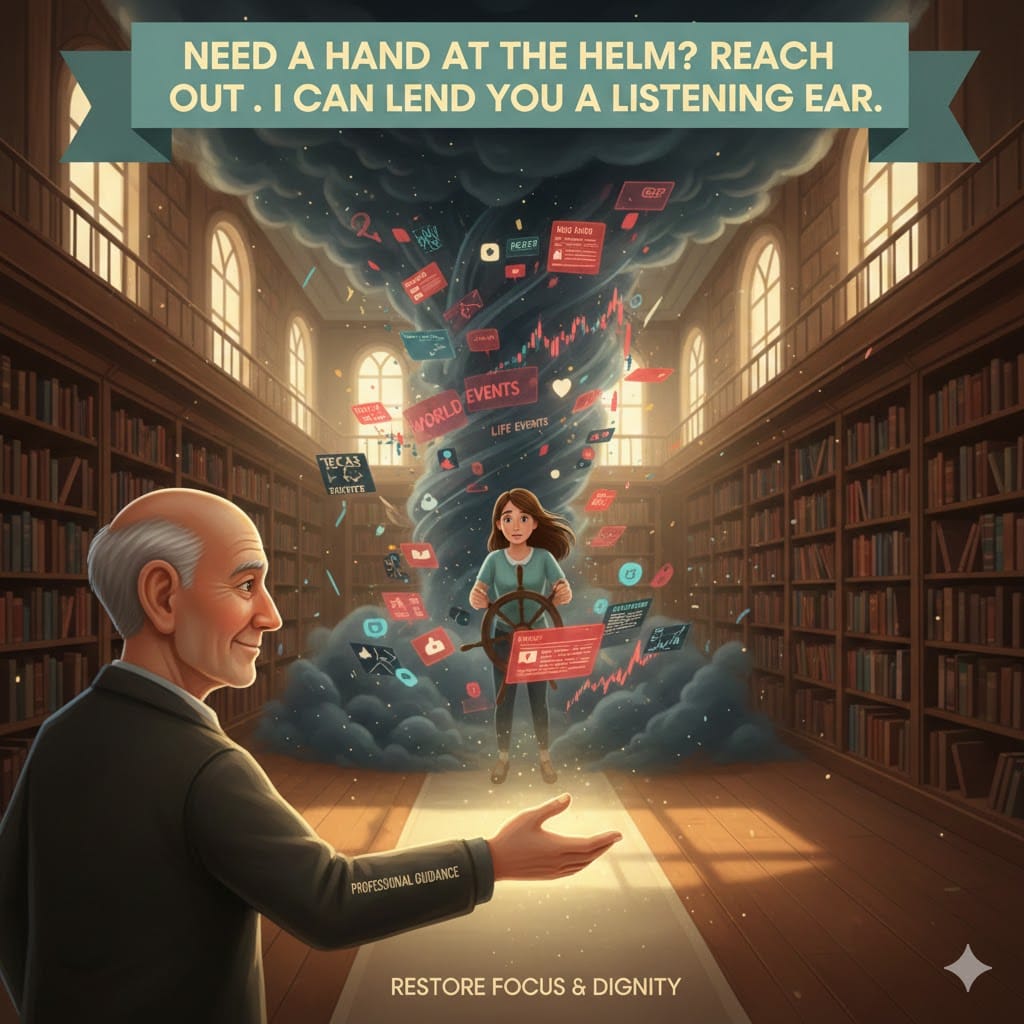
As a member, you hold the initiative: the topics, the questions, and the insights. As your moderator and partner, I am here to offer reflections and guidance—never to dictate. Within this space, you are invited to express your contemplations, question the world around us, and bring forward meaningful suggestions.
While my foundation lies deeply within the behavioral sciences, expertise does not equate to absolute certainty. That is precisely why contrasting our viewpoints is essential. Does that mean all viewpoints? No. This room is not designed for ideological debate or the political dissection of societal crises. Nor will we spend our energy dissecting the character of public figures; speculation only distances us from the truth.
Throughout my life and work, I have operated on a singular principle: a shared understanding rooted in the absolute equality of all individuals—regardless of background, appearance, or belief. Let us simply engage in true dialogue. Together, we will navigate toward solutions, strengthening our collective bond within a more cohesive society.”
If you would like a personal conversation, Prof. Peter is available online daily on workdays to exchange ideas...
Notice From Our Desk.
Our loyal visitors have not failed to notice that—in line with our ambition to grow into a significant player—we have thoroughly revamped our website. We have also ‘cleaned up’ the Timeline, and the old and familiar updated articles will be added at a later date. The articles can still be found in the categories. Stay tuned!
1. Notice From Our Desk.
📅 May 21, 2026•✍️ Editor In Chief
Notice From Our desk; Our loyal visitors have not failed to notice that—in line with our ambition to...
While we reach our members daily through a digital newsletter featuring relatively concise contemplations, every Saturday morning a deeper, broader article lands in your inbox—focused entirely on shifting perspectives. We practice the art of translating complex science into an accessible form; academic jargon is avoided as much as possible, or when absolutely necessary, paired with a clear, understandable explanation.
All our pages are fully accessible to those with reading impairments; the text can be easily enlarged and instantly translated into numerous foreign languages. Yet, we care deeply not only about the depth of our content but also about your personal well-being. It is for this exact reason that we strongly discourage the use of mobile phones while reading our work. This content reveals itself and delivers true value only when you truly sit down, take your time, and engage with the author or your fellow peers who are online.
We cordially invite you to suggest topics and offer your counsel. Together we stand strong, ensuring that we grow not only in quality but closer to one another.
And God knows how much we need to reach out to each other, hold onto each other, and, crucially, stand open-hearted for those who are currently struggling and could use a helping hand.
Welcome to Our Timeline: Essential Perspectives for 2026
📅 May 18, 2026•✍️ Editor In Chief
Discover daily reflections and weekly deep-dives into social philosophy, built for true human connection beyond the digital fog.
The Architecture of profpeter.online/
The past few days have been dedicated to perfecting the backbone of profpeter.online/. The site is now technically finalized, exceeding European standards and offering a vast array of features to enhance your membership experience.
Designed for your convenience:
Listen instead of reading:Are your eyes tired? You can now listen to every article on the platform.
Direct Correspondence: Want to avoid exhausting email chains? You can connect directly with our administration via audio or video call within our secure environment.
A Vital Security Note: Completeness and total security require precision. This means a page may take a few additional seconds to fully open for you. We have made a conscious choice: your safety and data integrity are far more important to us than saving a few measly seconds. Quality research requires a secure foundation.
The past few days have been dedicated to perfecting the backbone of profpeter.online/. The site is now technically...
Spark Behind Tower.
In November 2025, amid dopamine waves, commercials, and endless debates where people talk without speaking, I launched this practice as a forensic psychologist. Not just an overhaul, but a lighthouse of common sense and soul-peace—boosting social outreach for those battling mindset and focus in turbulent times. Trial, error, and purpose built a solid tower; now, in March 2026, it stands, guiding minds to clarity.
With deep commitment to freedom of speech—agenda-free—I ensure no one steers discussions to push or lure peers into social agendas. Yet freedom carries a tag: we rise without diminishing others, turning speech into word-competition. Without sufficient common sense, the tower risks becoming another echo chamber of noise—precisely what it’s built to dispel.
No one walks alone, and surely not me. I salute my family, friends, and informal sponsors for bearing with me, lending support, and providing motivation when trial and error gripped me.
Our Developing Partners.
Together, we power this machine: a safe space for mind-sharing, brainstorming, and genuine connection. This alliance turns ideas into impact. United in purpose, we create calm amid the storm.
No one walks alone, and surely not me. I salute my family, friends, and informal sponsors for bearing...
No ‘Mobile’, No Cry: Why We Turn Away from Mobile as a Learning Tool.
Against that backdrop, our decision to restrict the mobile experience is not aesthetic; it is clinical and ethical. We work with content that is cognitively dense and sometimes provocative, and with readers who are often already carrying high loads of stress, grief, outrage, or professional responsibility. Delivering that into a device designed for distraction and compulsion is, in our view, irresponsible.
1. The digital tether: why phones feel different.
Smartphones were built to make life easier, but for many, they function more like a digital tether than a tool. Problematic smartphone use (PSU) is not yet a formal disorder in DSM‑5, but its profile increasingly resembles other behavioral addictions such as gambling: loss of control, continued use despite harm, and significant impact on mood, sleep, and functioning. University samples around the world show striking numbers: large reviews report that roughly one‑third to more than half of students fall into “problematic use” categories, with consistent links to depression, anxiety, and impaired academic performance.
In other words, this is not simply “people spend too much time on their phones.” It is a structural pattern of distraction and dysregulation that collides directly with sustained, reflective learning.
2. Who is most at risk.
The research paints a consistent risk profile. Early and intensive smartphone use is a major vulnerability factor: the younger someone habituates to constant notifications and scrolling, the more likely they are to exhibit problematic use later. Gender patterns also emerge. Women tend to use phones as social lifelines, and their overuse is often driven by fear of disconnection, social comparison, and relational anxiety. Men are more likely to be pulled in by gaming, high‑stimulation apps, and risk‑taking or competitive behaviors that exploit reward circuitry differently.
Both paths lead to the same place: a device that no longer feels optional. That is a poor foundation for deep reading, clinical thinking, or emotionally demanding content.
3. The neurobiology of notifications.
From a neurobiological perspective, the smartphone is built on the same reinforcement logic as slot machines. Each notification, buzz, or red badge is an intermittent reward delivered on a variable ratio schedule: you never quite know when the next “hit” (‘like’, message, and or update) will arrive. This pattern is particularly effective at driving dopamine release in the brain’s reward system, which makes the behavior highly persistent. Over time, users are not checking the phone for information; they are checking for a chemical state change.
For serious learning—and especially for emotionally charged topics like forensic work, trauma, or high‑conflict politics—this is catastrophic. The device in your hand is actively training you to avoid discomfort and to seek micro‑rewards every time the material becomes demanding.
4. The mental and physical toll.
Problematic smartphone use is consistently linked to elevated rates of depression, anxiety, stress, and attentional disturbance, including ADHD‑like symptoms. “Nomophobia” (the fear of being without one’s phone) is now measurable in student populations, with many reporting moderate to severe distress when disconnected. Physically, heavy users frequently report circadian disruption (difficulty falling or staying asleep, due in part to blue light and late‑night engagement) and musculoskeletal issues such as neck and upper‑back pain from sustained device posture.
If you combine these effects with dense, morally and emotionally loaded material, the result is not “mobile learning.” It is a continuous stress test on an already overloaded nervous system.
5. Why this project turns away from mobile.
Against that backdrop, our decision to restrict the mobile experience is not aesthetic; it is clinical and ethical. We work with content that is cognitively dense and sometimes provocative, and with readers who are often already carrying high loads of stress, grief, outrage, or professional responsibility. Delivering that into a device designed for distraction and compulsion is, in our view, irresponsible.
By directing phone users into a minimal hub and reserving the full site for laptops and desktops, we are making a structural choice: we want you in a posture and environment more compatible with reflective thought, not dopamine‑driven hopping between tabs and apps.
6. From willpower to architecture: how people can change their phone use.
The literature on problematic smartphone use suggests that “just use your phone less” is a weak intervention. More effective approaches combine therapy and choice architecture:
Cognitive Behavioral Therapy (CBT) targets the triggers behind compulsive checking, such as boredom, social anxiety, or fear of missing out.
Choice architecture reshapes the environment: turning off non‑essential notifications, moving high‑temptation apps off the home screen, and creating “phone‑free zones” (for example, bedroom or study desk).
Batchingnotifications and messages at fixed times reduces the constant dopamine drip and allows the brain to recover longer stretches of uninterrupted focus.
These strategies do not demonize technology; they put it back in its place—under conscious control, rather than operating as an unseen scheduler of attention and mood.
7. What this means for how we teach and publish.
Our stance is simple:
Mobile phones are excellent for alerts, logistics, and quick contact.
They are profoundly ill‑suited for deep learning and high‑voltage material.
So our ecosystem reflects that:
Phones see a lean mobile hub: appointments, a chat doorway, one orienting article, and essential updates.
Desktops and tablets see the full site, with space—literally and psychologically—for longer arguments, complex cases, and difficult nuance.
We are not anti‑technology. We are anti‑architecture that quietly undermines attention, mental health, and ethical reflection. Turning away from mobile as a primary learning tool is, for us, part of treating both the material and the reader with respect.
No 'Mobile', No Cry.
📅 March 8, 2026•✍️ Editor In Chief
Against that backdrop, our decision to restrict the mobile experience is not aesthetic; it is clinical and ethical.
The 1st Step: Why We Leave the Noise Behind.
From algorithms to real humanity. Welcome to a new harbor.
Why We Leave the Noise Behind
The move is complete. My archive is safe, the suitcases are unpacked, and the digital dust cloud from the crossing is settling. Many of you know me from my daily reflections on Facebook. But as I’ve written before: a timeline is fleeting. It’s a marketplace where everyone shouts for attention, while the real conversations often take place in the background.
What can you expect here? On this platform and on my own website, I want to make space for what truly matters. No fleeting “likes,” but:
• Depth in psychology: lessons from 34 years of practical experience with abuse and human behavior. • Geopolitical reflections: looking at the world with an open mind, without the constraints of an algorithm. • The soundtrack of life: why the music of Dylan, Cocker, or Hazes still tells us something about our own soul.
The “Love Boat” As I wrote in my earlier post about Ramadan and Gen Z: we too often find ourselves in the Machinery (the algorithms, the data, the control) while we long for a Love Boat (connection, intimacy, and respect).
This channel is my attempt to crew that “Love Boat.” No intrusive buttons, no blaring ads. Just thoughts on paper. I’m glad you’re here. Let’s see together where the wind takes us.
The 1st Step
📅 January 2, 2026•✍️ Editor In Chief
The move is complete. My archive is safe, the suitcases are unpacked, and the digital dust cloud from...
We utilize essential cookies to safeguard your interface preferences, power the Voice Atlas engine, and ensure structural security. By continuing your exploration, you accept this baseline architecture.
When you click the 📋 Copy button on any post, the exact title of that article is automatically saved to your clipboard.
You can then navigate to your personal page and paste the title under the Tools tab.
Pasting the title unlocks advanced features, allowing you to listen to the audio version of the article or join a live chat with peers to discuss the content in real time.
📖 Active Full-Width Article
📅 •✍️ By
💡 Tip: Double-click anywhere in the text area to close
Local time Malaysia, Monday to Friday 19.00-21.00 hours.
As a member, you hold the initiative: the topics, the questions, and the insights. As your moderator and partner, I am here to offer reflections and guidance—never to dictate. Within this space, you are invited to express your contemplations, question the world around us, and bring forward meaningful suggestions.
While my foundation lies deeply within the behavioral sciences, expertise does not equate to absolute certainty. That is precisely why contrasting our viewpoints is essential. Does that mean all viewpoints? No. This room is not designed for ideological debate or the political dissection of societal crises. Nor will we spend our energy dissecting the character of public figures; speculation only distances us from the truth.
Throughout my life and work, I have operated on a singular principle: a shared understanding rooted in the absolute equality of all individuals—regardless of background, appearance, or belief. Let us simply engage in true dialogue. Together, we will navigate toward solutions, strengthening our collective bond within a more cohesive society.”
If you would like a personal conversation, Prof. Peter is available online daily on workdays to exchange ideas...
Notice From Our Desk.
Our loyal visitors have not failed to notice that—in line with our ambition to grow into a significant player—we have thoroughly revamped our website. We have also ‘cleaned up’ the Timeline, and the old and familiar updated articles will be added at a later date. The articles can still be found in the categories. Stay tuned!
1. Notice From Our Desk.
📅 May 21, 2026•✍️ Editor In Chief
Notice From Our desk; Our loyal visitors have not failed to notice that—in line with our ambition to...
While we reach our members daily through a digital newsletter featuring relatively concise contemplations, every Saturday morning a deeper, broader article lands in your inbox—focused entirely on shifting perspectives. We practice the art of translating complex science into an accessible form; academic jargon is avoided as much as possible, or when absolutely necessary, paired with a clear, understandable explanation.
All our pages are fully accessible to those with reading impairments; the text can be easily enlarged and instantly translated into numerous foreign languages. Yet, we care deeply not only about the depth of our content but also about your personal well-being. It is for this exact reason that we strongly discourage the use of mobile phones while reading our work. This content reveals itself and delivers true value only when you truly sit down, take your time, and engage with the author or your fellow peers who are online.
We cordially invite you to suggest topics and offer your counsel. Together we stand strong, ensuring that we grow not only in quality but closer to one another.
And God knows how much we need to reach out to each other, hold onto each other, and, crucially, stand open-hearted for those who are currently struggling and could use a helping hand.
Welcome to Our Timeline: Essential Perspectives for 2026
📅 May 18, 2026•✍️ Editor In Chief
Discover daily reflections and weekly deep-dives into social philosophy, built for true human connection beyond the digital fog.
The Architecture of profpeter.online/
The past few days have been dedicated to perfecting the backbone of profpeter.online/. The site is now technically finalized, exceeding European standards and offering a vast array of features to enhance your membership experience.
Designed for your convenience:
Listen instead of reading:Are your eyes tired? You can now listen to every article on the platform.
Direct Correspondence: Want to avoid exhausting email chains? You can connect directly with our administration via audio or video call within our secure environment.
A Vital Security Note: Completeness and total security require precision. This means a page may take a few additional seconds to fully open for you. We have made a conscious choice: your safety and data integrity are far more important to us than saving a few measly seconds. Quality research requires a secure foundation.
The past few days have been dedicated to perfecting the backbone of profpeter.online/. The site is now technically...
Spark Behind Tower.
In November 2025, amid dopamine waves, commercials, and endless debates where people talk without speaking, I launched this practice as a forensic psychologist. Not just an overhaul, but a lighthouse of common sense and soul-peace—boosting social outreach for those battling mindset and focus in turbulent times. Trial, error, and purpose built a solid tower; now, in March 2026, it stands, guiding minds to clarity.
With deep commitment to freedom of speech—agenda-free—I ensure no one steers discussions to push or lure peers into social agendas. Yet freedom carries a tag: we rise without diminishing others, turning speech into word-competition. Without sufficient common sense, the tower risks becoming another echo chamber of noise—precisely what it’s built to dispel.
No one walks alone, and surely not me. I salute my family, friends, and informal sponsors for bearing with me, lending support, and providing motivation when trial and error gripped me.
Our Developing Partners.
Together, we power this machine: a safe space for mind-sharing, brainstorming, and genuine connection. This alliance turns ideas into impact. United in purpose, we create calm amid the storm.
No one walks alone, and surely not me. I salute my family, friends, and informal sponsors for bearing...
No ‘Mobile’, No Cry: Why We Turn Away from Mobile as a Learning Tool.
Against that backdrop, our decision to restrict the mobile experience is not aesthetic; it is clinical and ethical. We work with content that is cognitively dense and sometimes provocative, and with readers who are often already carrying high loads of stress, grief, outrage, or professional responsibility. Delivering that into a device designed for distraction and compulsion is, in our view, irresponsible.
1. The digital tether: why phones feel different.
Smartphones were built to make life easier, but for many, they function more like a digital tether than a tool. Problematic smartphone use (PSU) is not yet a formal disorder in DSM‑5, but its profile increasingly resembles other behavioral addictions such as gambling: loss of control, continued use despite harm, and significant impact on mood, sleep, and functioning. University samples around the world show striking numbers: large reviews report that roughly one‑third to more than half of students fall into “problematic use” categories, with consistent links to depression, anxiety, and impaired academic performance.
In other words, this is not simply “people spend too much time on their phones.” It is a structural pattern of distraction and dysregulation that collides directly with sustained, reflective learning.
2. Who is most at risk.
The research paints a consistent risk profile. Early and intensive smartphone use is a major vulnerability factor: the younger someone habituates to constant notifications and scrolling, the more likely they are to exhibit problematic use later. Gender patterns also emerge. Women tend to use phones as social lifelines, and their overuse is often driven by fear of disconnection, social comparison, and relational anxiety. Men are more likely to be pulled in by gaming, high‑stimulation apps, and risk‑taking or competitive behaviors that exploit reward circuitry differently.
Both paths lead to the same place: a device that no longer feels optional. That is a poor foundation for deep reading, clinical thinking, or emotionally demanding content.
3. The neurobiology of notifications.
From a neurobiological perspective, the smartphone is built on the same reinforcement logic as slot machines. Each notification, buzz, or red badge is an intermittent reward delivered on a variable ratio schedule: you never quite know when the next “hit” (‘like’, message, and or update) will arrive. This pattern is particularly effective at driving dopamine release in the brain’s reward system, which makes the behavior highly persistent. Over time, users are not checking the phone for information; they are checking for a chemical state change.
For serious learning—and especially for emotionally charged topics like forensic work, trauma, or high‑conflict politics—this is catastrophic. The device in your hand is actively training you to avoid discomfort and to seek micro‑rewards every time the material becomes demanding.
4. The mental and physical toll.
Problematic smartphone use is consistently linked to elevated rates of depression, anxiety, stress, and attentional disturbance, including ADHD‑like symptoms. “Nomophobia” (the fear of being without one’s phone) is now measurable in student populations, with many reporting moderate to severe distress when disconnected. Physically, heavy users frequently report circadian disruption (difficulty falling or staying asleep, due in part to blue light and late‑night engagement) and musculoskeletal issues such as neck and upper‑back pain from sustained device posture.
If you combine these effects with dense, morally and emotionally loaded material, the result is not “mobile learning.” It is a continuous stress test on an already overloaded nervous system.
5. Why this project turns away from mobile.
Against that backdrop, our decision to restrict the mobile experience is not aesthetic; it is clinical and ethical. We work with content that is cognitively dense and sometimes provocative, and with readers who are often already carrying high loads of stress, grief, outrage, or professional responsibility. Delivering that into a device designed for distraction and compulsion is, in our view, irresponsible.
By directing phone users into a minimal hub and reserving the full site for laptops and desktops, we are making a structural choice: we want you in a posture and environment more compatible with reflective thought, not dopamine‑driven hopping between tabs and apps.
6. From willpower to architecture: how people can change their phone use.
The literature on problematic smartphone use suggests that “just use your phone less” is a weak intervention. More effective approaches combine therapy and choice architecture:
Cognitive Behavioral Therapy (CBT) targets the triggers behind compulsive checking, such as boredom, social anxiety, or fear of missing out.
Choice architecture reshapes the environment: turning off non‑essential notifications, moving high‑temptation apps off the home screen, and creating “phone‑free zones” (for example, bedroom or study desk).
Batchingnotifications and messages at fixed times reduces the constant dopamine drip and allows the brain to recover longer stretches of uninterrupted focus.
These strategies do not demonize technology; they put it back in its place—under conscious control, rather than operating as an unseen scheduler of attention and mood.
7. What this means for how we teach and publish.
Our stance is simple:
Mobile phones are excellent for alerts, logistics, and quick contact.
They are profoundly ill‑suited for deep learning and high‑voltage material.
So our ecosystem reflects that:
Phones see a lean mobile hub: appointments, a chat doorway, one orienting article, and essential updates.
Desktops and tablets see the full site, with space—literally and psychologically—for longer arguments, complex cases, and difficult nuance.
We are not anti‑technology. We are anti‑architecture that quietly undermines attention, mental health, and ethical reflection. Turning away from mobile as a primary learning tool is, for us, part of treating both the material and the reader with respect.
https://youtu.be/HP9v3s8U71M?si=gbXGyXWrQdQBFRCf
No 'Mobile', No Cry.
📅 March 8, 2026•✍️ Editor In Chief
Against that backdrop, our decision to restrict the mobile experience is not aesthetic; it is clinical and ethical.
The 1st Step: Why We Leave the Noise Behind.
From algorithms to real humanity. Welcome to a new harbor.
Why We Leave the Noise Behind
The move is complete. My archive is safe, the suitcases are unpacked, and the digital dust cloud from the crossing is settling. Many of you know me from my daily reflections on Facebook. But as I’ve written before: a timeline is fleeting. It’s a marketplace where everyone shouts for attention, while the real conversations often take place in the background.
What can you expect here? On this platform and on my own website, I want to make space for what truly matters. No fleeting “likes,” but:
• Depth in psychology: lessons from 34 years of practical experience with abuse and human behavior. • Geopolitical reflections: looking at the world with an open mind, without the constraints of an algorithm. • The soundtrack of life: why the music of Dylan, Cocker, or Hazes still tells us something about our own soul.
The “Love Boat” As I wrote in my earlier post about Ramadan and Gen Z: we too often find ourselves in the Machinery (the algorithms, the data, the control) while we long for a Love Boat (connection, intimacy, and respect).
This channel is my attempt to crew that “Love Boat.” No intrusive buttons, no blaring ads. Just thoughts on paper. I’m glad you’re here. Let’s see together where the wind takes us.
The 1st Step
📅 January 2, 2026•✍️ Editor In Chief
The move is complete. My archive is safe, the suitcases are unpacked, and the digital dust cloud from...